
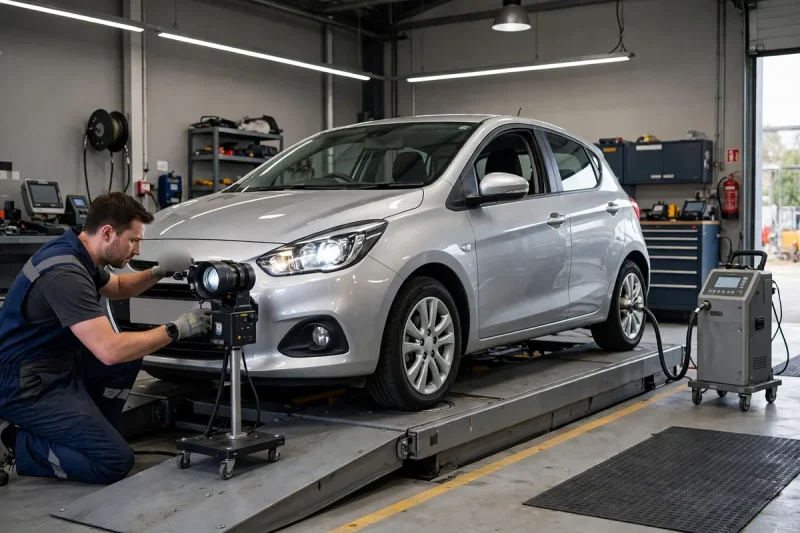
Understanding MOT and service requirements helps every UK driver keep a vehicle legal, safe and reliable. Although the two terms are often mentioned together, they describe different things. An MOT is a formal inspection carried out to set testing standards, while a service is maintenance work carried out to keep the vehicle in good working order. This guide explains when a vehicle needs its first test, what testers check, how results and defect categories work, and how simple maintenance planning between tests can support road safety and vehicle compliance throughout the year.
Key Takeaways
- An MOT is a formal roadworthiness inspection shaped by DVSA regulations, not a repair or a maintenance service.
- Most cars need a first MOT at three years old, and then a test every year after that.
- Testers check lights, brakes, tyres, steering, visibility and emissions, among other safety items.
- Defects are described in general terms as dangerous, major or minor, and the category affects the result.
- A service is separate maintenance work that helps a vehicle stay ready for its test.
- Simple checks through the year form a sensible MOT checklist and help you avoid an unnecessary failure.
When Does a Vehicle Need Its First MOT?
For most cars and motorcycles, the first MOT falls due when the vehicle is three years old, counting from its first registration. Some types of vehicle are tested sooner, and a small number follow different rules, so check the exact date for your own vehicle against official guidance and your registration document. If you buy a vehicle that is already a few years old, its test date will be based on when it was first registered, not on when you bought it.
After that first test, the pattern settles into annual inspections. Each pass sets the date by which the next test is due, and you can normally have the vehicle tested a little early without losing that renewal date, which gives you time to deal with any repairs if the vehicle does not pass. Booking ahead is a simple habit that removes much of the stress from the process and turns a failed test into a manageable problem rather than an urgent scramble.
What Is Checked During an MOT?
The MOT is carried out by approved testers working to common testing standards, and it focuses on the parts of the vehicle that matter most for safety and for the environment. The tester does not strip the vehicle down or carry out repairs as part of the test itself, but inspects, measures and checks each area against the required standard and records what is found.
Lights and Signalling
All of the vehicle’s lights should be present, secure and working as intended, with lenses in reasonable condition and the correct colours showing. That includes headlights, indicators, brake lights and number plate lights, as well as headlight aim, so that the driver can see clearly and signal clearly to others.
Brakes
The braking system is checked for its overall condition and for how well it actually stops the vehicle. Pedals, pipes and hoses are inspected for wear, damage and leaks, and braking performance and balance are measured so the vehicle pulls up safely and in a straight line. The parking brake is checked too.
Tyres and Wheels
Tyres must be the correct type and size for the vehicle, in good condition and inflated appropriately, with tread depth meeting the legal minimum. Cuts, bulges and damaged wheels can all cause problems at test time. Uneven wear is also worth investigating beforehand, because it can point to steering or alignment issues; our guide to wheel alignment explains the warning signs to look for.
Steering and Suspension
The steering must respond accurately and without excessive play, so the tester checks the steering wheel, column and linkages, along with the suspension joints, springs and shock absorbers that keep the wheels in proper contact with the road. Worn or damaged parts here affect how the vehicle handles and how evenly its tyres wear, so problems in this area are taken seriously.
Visibility and the Driver’s View
The driver needs a clear view of the road, so the windscreen is checked for damage in the areas that matter, and the wipers and washers must clear the screen properly. Mirrors must be present, secure and usable, and nothing fitted to the glass should seriously restrict the view.
Emissions and the Exhaust System
For vehicles with an engine, the exhaust system must be secure, complete and reasonably quiet, without leaks that could let gases into the cabin. Exhaust emissions are measured against the standards that apply to the vehicle, and visible smoke can also be a problem. Electric vehicles have no exhaust emissions to measure, but the rest of the test still applies.
The test also covers seatbelts and seats, the horn, doors and catches, the body and structure, registration plates and dashboard warning lights, all part of vehicle compliance in everyday use.
Understanding MOT Results and Defect Categories
When the test is finished, the vehicle either passes or fails, and the result is recorded along with any defects found. A pass means the vehicle met the required standard on the day of the test, not that nothing will wear out afterwards.
Dangerous Defects
A dangerous defect is the most serious kind. It means a fault presents a direct and immediate risk to road safety or a serious impact on the environment, and the vehicle should not be driven until the fault has been repaired.
Major Defects
A major defect also causes the vehicle to fail its test. It may affect the safety of the vehicle, put other road users at risk or have an impact on the environment. The repair should be dealt with promptly, and the vehicle then needs to pass a further test.
Minor Defects and Advisories
Minor defects are smaller faults that do not cause a failure on their own, because they have no significant effect on safety or the environment. The vehicle can still pass with minor defects recorded, but they should be repaired as soon as possible before they develop into something worse. Testers can also record advisory items: things that are not yet defects, but are starting to wear or will need attention before long.
Whatever the result, the paperwork is worth reading carefully and keeping. If repairs are needed, ask for a clear explanation of the work and the parts involved before you agree to anything, and keep the invoice afterwards. If the cost of essential repairs is difficult to manage in one payment, our guide to repair finance explains the options drivers sometimes use to spread the cost responsibly.
How an MOT Differs From a Service
Many drivers book an MOT and service on the same day, which is convenient, but the two appointments do different jobs. The MOT is an inspection only. The tester checks the vehicle against set standards and reports the result, and the test itself does not include repairs, adjustments or replacement parts. A pass simply confirms that the vehicle met the minimum standard at the time it was tested.
A service, by contrast, is hands-on maintenance. Following the vehicle maker’s schedule, a technician will typically change fluids and filters, inspect key systems in more depth and replace parts that wear out in normal use. A service helps to keep the vehicle reliable and can pick up developing faults early, but it is not an official test, and a recent service does not prove the vehicle would pass an MOT.
Choosing where to have the work done matters too. MOTs are carried out at approved test centres, while servicing and repairs can be done by a wide range of garages, so it helps to compare workshops carefully. Our guide to automotive service companies explains the different types of UK workshop and the questions to ask before you book.
A Simple MOT Checklist Before the Test
A short MOT checklist in the days before your appointment can catch the faults that are cheapest and easiest to put right. Work through the basics yourself, and book any repairs in good time:
- Check every light and indicator works, including the brake lights and number plate lights.
- Top up the washer fluid and replace worn wiper blades that smear the screen.
- Look over each tyre for damage and uneven wear, and check the pressures.
- Make sure the mirrors are secure and the windscreen is clean and undamaged.
- Test the horn, check the seatbelts pull out and clip in properly, and note any dashboard warning lights.
Maintenance Planning Between Tests
Good maintenance planning spreads small jobs across the year instead of saving every problem for test day. Follow the maker’s service schedule, act on advisories from the last test rather than filing them away, and keep a simple record of the work done, the parts fitted and the dates involved. A brief walk-around check every few weeks, covering lights, tyres and fluid levels, will catch most developing faults while they are still minor.
It also helps to set a little money aside regularly for upkeep, so that a worn tyre or a tired battery is an inconvenience rather than a crisis. Keeping on top of small repairs protects the larger systems around them and means the annual test becomes a confirmation of the vehicle’s condition rather than a verdict you have to fear.
Ownership Responsibilities for UK Drivers
Under DVSA regulations, the MOT is only a snapshot taken on one day. Ownership responsibilities last all year round: the person who keeps and drives the vehicle is responsible for keeping it roadworthy every time it is used, not just on test day. Driving a vehicle with a known dangerous fault is a risk to everyone, whatever its certificate says.
Those responsibilities begin before you even own the vehicle. If you are buying, our used cars buying guide explains why the MOT history and maintenance records should be among the first things you check, since they show how the vehicle has been looked after and what may need attention soon. Keeping your own test and service paperwork then gives the next owner the same reassurance.
Frequently Asked Questions
Is an MOT the same as a service?
No. An MOT is a formal inspection against set standards that ends in a pass or a fail, while a service is maintenance work carried out to the maker’s schedule. Booking an MOT and service together is convenient, but one does not replace the other.
When does a vehicle need its first MOT?
For most cars and motorcycles, the first test falls due when the vehicle is three years old, counting from first registration, and tests then follow every year. Some vehicle types are tested sooner, so check the exact date for your vehicle if you are unsure.
What happens if a vehicle fails its MOT?
The defects are recorded and grouped in general terms as dangerous, major or minor in nature, although only dangerous and major defects cause a failure. The faults need to be repaired and the vehicle needs to pass a further test. A vehicle with a dangerous defect should not be driven until it is repaired.
Does a pass mean no maintenance is needed until the next test?
No. A pass confirms the vehicle met the standard on the day it was tested. Wear and faults can develop at any time afterwards, so regular checks, servicing in line with the maker’s schedule and prompt attention to advisories remain part of responsible ownership.