
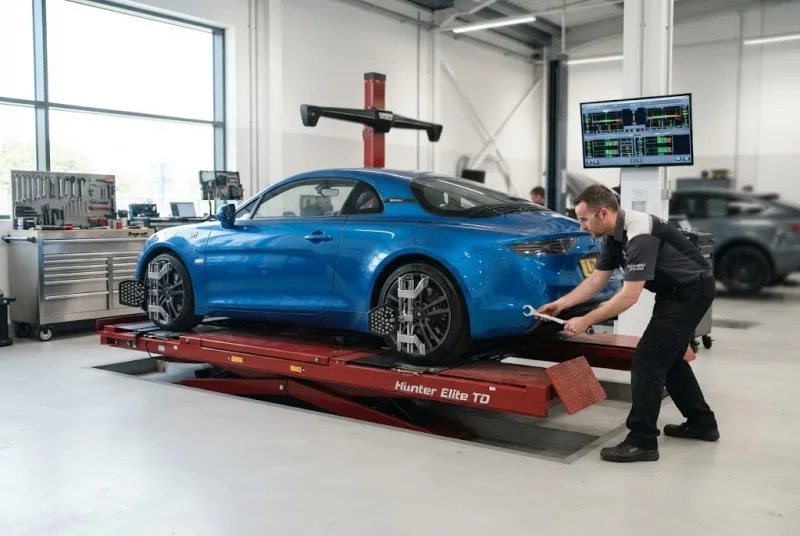
Wheel alignment is an important part of vehicle maintenance that affects steering, handling, tyre wear and overall driving performance. When the wheels are correctly aligned, the tyres can make proper contact with the road and the vehicle should track predictably. When alignment is incorrect, drivers may notice the car pulling to one side, an off-centre steering wheel or unusual tyre wear.
UK roads can expose vehicles to potholes, kerbs and uneven surfaces, all of which can contribute to alignment problems. Suspension repairs, steering work and tyre replacement can also be reasons to check alignment.
Understanding how alignment works and recognising the warning signs can help motorists deal with problems before they lead to unnecessary tyre wear or compromised handling.
What Is Wheel Alignment?
Wheel alignment is the process of measuring and, where adjustable, correcting the angles of a vehicle’s wheels and suspension so they match the manufacturer’s specifications.
Despite the name, alignment is not simply about moving the wheels into a visually straight position. A technician uses specialist equipment to measure the geometry of the vehicle and determine whether the relevant angles are within specification.
Three important alignment measurements are camber, caster and toe. The exact adjustment possibilities vary between vehicle designs.
Camber
Camber describes the inward or outward tilt of a wheel when viewed from the front of the vehicle. Incorrect camber can contribute to uneven tyre wear and may affect how the tyre contacts the road.
Caster
Caster relates to the angle of the steering axis when viewed from the side. It contributes to steering stability and the way the steering wheel returns towards its central position.
Toe
Toe describes the direction in which the wheels point when viewed from above. Incorrect toe settings can cause tyres to scrub against the road and contribute to rapid or uneven wear.
Because these measurements interact with the vehicle’s suspension and steering geometry, alignment should be carried out using appropriate equipment and manufacturer specifications.
Why Wheel Alignment Matters
Correct alignment helps a vehicle handle predictably and allows tyres to work as intended. It can also help prevent avoidable uneven wear.
The RAC notes that misalignment can contribute to uneven tyre wear, pulling to one side and handling problems.
Tyres are the vehicle’s only contact with the road, so their condition is directly relevant to safety. Poor alignment can also make a vehicle feel less stable or require the driver to make constant steering corrections.
For this reason, alignment should be considered alongside other areas of routine maintenance rather than treated as an optional cosmetic adjustment.
Signs You May Need Wheel Alignment
Alignment problems can sometimes develop gradually. Knowing what to look for can help drivers arrange an inspection sooner.
The Car Pulls to One Side
If the vehicle consistently drifts or pulls left or right while travelling on a reasonably level road, alignment may need to be checked. Road camber can naturally influence how a vehicle feels, so a technician should diagnose the underlying cause rather than assuming every steering tendency is an alignment fault.
The Steering Wheel Is Off-Centre
An unusually crooked steering wheel while the vehicle is travelling straight can indicate an alignment or steering geometry issue. It may also follow suspension or steering work.
Uneven Tyre Wear
Uneven wear is one of the most useful clues. Drivers should look for differences between the inner and outer edges of the tread or unusual wear patterns across the tyre.
However, alignment is not the only possible cause. Incorrect tyre pressure, wheel imbalance, worn suspension components and driving conditions can also contribute to uneven wear.
Steering Feels Unusual
Changes in steering feel, particularly after hitting a pothole or kerb, should not be ignored. Alignment problems can affect how the vehicle responds to steering inputs.
Unusual Tyre Noise
Abnormal tyre noise can sometimes accompany uneven wear. Because several mechanical issues can produce similar symptoms, a professional inspection is preferable to assuming the problem is alignment alone.
What Causes Wheel Misalignment?
Alignment can change for several reasons. Some problems develop through normal wear, while others result from impacts or repairs.
Potholes and Kerbs
Strong impacts from potholes or kerbs can affect wheel and suspension geometry. After a significant impact, drivers should pay attention to new steering symptoms, vibration or changes in tyre wear.
Suspension Wear
Worn or damaged suspension components can affect the geometry of the vehicle. In some cases, alignment cannot be corrected properly until the underlying mechanical problem has been repaired.
Steering Repairs
Work involving steering or suspension components can alter wheel geometry. A subsequent alignment check may therefore be appropriate after certain repairs.
Normal Wear and Road Conditions
Vehicle components experience continual loads from everyday driving. UK road conditions, repeated impacts and mileage can all contribute to changes in suspension geometry over time.
Wheel Alignment vs Wheel Balancing
Wheel alignment and wheel balancing are different services, although motorists sometimes confuse them.
Alignment concerns the geometry of the vehicle’s wheels and suspension. Balancing concerns the distribution of weight around the wheel and tyre assembly so that it rotates smoothly.
An imbalance can contribute to vibration, particularly at certain speeds. Misalignment is more commonly associated with pulling, an off-centre steering wheel and uneven tyre wear.
Because the symptoms can overlap, a professional workshop may inspect both the tyres and wheels before deciding what work is required.
What Happens During a Wheel Alignment?
A professional alignment normally begins with an inspection. The technician may check the tyres, steering and suspension for damage or wear that could affect the measurements.
Specialist alignment equipment is then used to measure the relevant wheel angles. Modern systems can display measurements digitally and compare them with the manufacturer’s specifications.
If adjustments are possible, the technician makes the appropriate corrections and checks the measurements again. The exact procedure varies according to the vehicle and the alignment equipment being used.
The RAC describes the process as involving an initial inspection, measurement, adjustment and final check.
When Should You Get Wheel Alignment Checked?
There is no universal interval that applies perfectly to every vehicle. Driving conditions, suspension condition and the manufacturer’s specifications all matter.
Some garages recommend periodic checks, while others focus on checking alignment when symptoms appear or after a significant impact. Recent RAC guidance notes that alignment frequency can vary according to road conditions, driving habits and vehicle condition.
A check can be particularly sensible after hitting a substantial pothole or kerb, after certain suspension or steering repairs, or when unusual tyre wear appears.
It can also be useful to ask for an alignment check when fitting new tyres if there are signs that the previous tyres wore unevenly.
Wheel Alignment After New Tyres
New tyres do not automatically mean that every vehicle needs an alignment adjustment. However, checking the alignment can be worthwhile when the previous tyres showed uneven wear or when the vehicle has steering symptoms.
Correct geometry helps the new tyres make consistent contact with the road. If the underlying alignment issue is not addressed, new tyres can eventually develop the same uneven wear pattern.
This is why tyre replacement can be a good opportunity to ask the garage whether an alignment inspection is appropriate.
How Wheel Alignment Affects Tyre Wear
Incorrect alignment can cause a tyre to contact the road unevenly. Depending on the specific geometry problem, wear may become concentrated on an inner or outer edge or develop across the tread in an unusual pattern.
Uneven wear reduces the useful life of the tyre and can make it harder for the driver to judge how much usable tread remains.
Tyre pressure should also be checked regularly because incorrect pressure can create its own wear patterns. The RAC identifies tyre pressure, misalignment, wheel imbalance and suspension problems among the possible causes of excessive or uneven tyre wear.
Wheel Alignment and Steering Performance
Steering geometry has a direct relationship with how a vehicle responds to driver inputs. When the alignment is outside specification, the car may feel less settled or require more steering correction.
A steering wheel that does not sit centrally while driving straight can be a useful warning sign. However, steering symptoms can also come from worn components, tyre problems or other mechanical faults.
For that reason, a proper inspection should consider the entire steering and suspension system rather than simply adjusting alignment without investigating other possible causes.
Choosing a Garage for Wheel Alignment
Alignment requires specialist measurement equipment and technicians who understand how to interpret the results. When choosing a garage, ask whether it has suitable alignment equipment for your vehicle.
It is also useful to ask whether the garage checks suspension and steering components before making adjustments. If a worn component is affecting the geometry, simply adjusting the alignment may not provide a lasting solution.
Our guide to automotive service companies explains how UK motorists can compare independent garages, authorised workshops and specialist repair businesses.
Large garage chains may also offer alignment services, but motorists should confirm that the selected branch provides the required service and equipment.
Wheel Alignment for Hybrid and Electric Vehicles
Alignment remains relevant regardless of the vehicle’s powertrain. Hybrid and electric vehicles still rely on tyres, steering and suspension to maintain safe road contact.
Owners should therefore include wheel and tyre condition within their wider maintenance routine. Our hybrid servicing guide covers broader maintenance considerations for hybrid vehicles, while the EV servicing guide explains maintenance requirements for electric cars.
Electric and hybrid technology does not eliminate the need for routine checks of steering, suspension and tyres. In fact, identifying uneven tyre wear early can be particularly useful because replacing tyres can be costly on any vehicle.
Can Wheel Alignment Improve Fuel Economy?
Incorrect alignment can increase rolling resistance and contribute to inefficient tyre wear. Maintaining correct alignment can therefore support efficient vehicle operation, although it should not be viewed as a guaranteed way to produce a noticeable fuel saving.
Tyre pressure, vehicle load, driving style, traffic conditions, vehicle condition and engine or drivetrain efficiency can all influence fuel consumption.
The primary reasons to maintain correct alignment are safe handling, predictable steering and appropriate tyre wear.
How Much Does Wheel Alignment Cost?
The price varies between garages and depends on the vehicle and the type of alignment required. Front-wheel alignment and four-wheel alignment can have different prices, while damaged suspension or steering components may add to the total repair bill.
Recent RAC guidance puts a typical UK front-and-rear alignment around the £80–£90 range, while noting that costs vary according to factors such as vehicle type and condition.
Rather than selecting a garage solely on the lowest price, ask what the quoted service includes. A professional alignment should involve measurement against appropriate specifications and confirmation that the final settings are correct.
What If Alignment Cannot Be Corrected?
If measurements remain outside specification after adjustment, there may be an underlying mechanical problem. Worn suspension components, damaged steering parts or accident-related damage can affect alignment.
A reputable technician should explain the issue and recommend the appropriate repair instead of repeatedly adjusting the alignment without addressing the cause.
This is another reason why inspection and diagnosis are important parts of the process.
Wheel Alignment and Regular Vehicle Maintenance
Alignment should be considered alongside tyre pressure checks, brake inspections, suspension maintenance and regular servicing. These systems work together to influence how a vehicle behaves on the road.
Drivers should pay attention to changes rather than waiting until a tyre becomes severely worn. Early investigation can make it easier to identify whether the problem is alignment, balancing, tyre pressure or another mechanical issue.
Keeping service and repair records can also help technicians understand the vehicle’s history, especially if alignment problems appear after suspension or steering work.
Final Thoughts on Wheel Alignment
Wheel alignment plays an important role in steering response, handling and tyre wear. Problems can develop after pothole impacts, kerb strikes, suspension repairs or normal vehicle use, and the symptoms are not always immediately obvious.
Drivers should watch for uneven tyre wear, pulling to one side, an off-centre steering wheel and changes in handling. When these signs appear, a professional inspection can determine whether alignment or another component is responsible.
Maintaining correct wheel geometry is a relatively focused part of vehicle maintenance, but it can have a meaningful effect on how confidently and efficiently a car uses its tyres. For UK motorists, checking alignment when symptoms appear or after relevant repairs is a sensible part of responsible vehicle care.