Indoor fake plants can be a practical way to introduce greenery, colour and texture into a home without the regular watering, pruning and light requirements associated with living plants. Modern artificial plants are available in a wide range of shapes and sizes, from compact potted varieties for shelves to large statement plants designed to fill an empty corner.
For busy UK households, artificial greenery can also make decorating easier. You can use it in rooms where natural light is limited, move it between spaces when refreshing your interior and combine different plant sizes to create a layered appearance.
The key is choosing artificial plants that suit the room rather than filling every available surface with greenery. Placement, scale, pot design, colour and texture all influence how convincing and attractive the finished arrangement looks.
Why Choose Indoor Fake Plants?
One of the main advantages of artificial greenery is convenience. Real plants require appropriate light, water and ongoing care, while artificial alternatives can maintain their appearance with relatively little maintenance.
This can be useful in homes where certain rooms receive limited daylight. It also allows you to introduce greenery into areas where maintaining a living plant may be impractical.
Artificial plants can also provide consistency. A living plant may change with the seasons or struggle in an unsuitable environment, whereas a good-quality artificial plant can retain its intended shape and colour for much longer.
Fake Indoor House Plants for Different Rooms
Fake indoor house plants can work in almost any room when their size and style are appropriate. Instead of choosing the same plant for every space, consider what the room needs visually.
Living Room
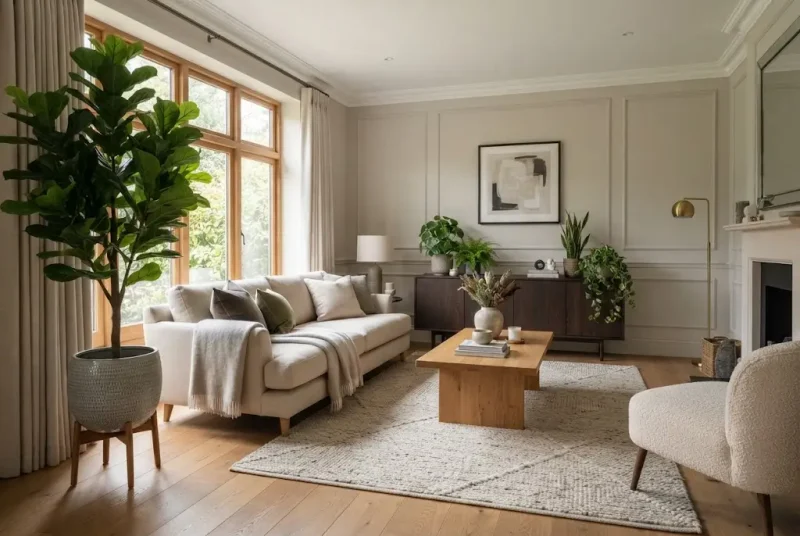
The living room is often one of the easiest places to introduce artificial greenery. A medium or large plant can fill an empty corner, while smaller plants can be placed on shelves, side tables or cabinets.
Large foliage can also soften rooms dominated by hard surfaces such as wood, glass and metal. For a coordinated interior, consider combining greenery with a textured floor covering such as black rugs for living room spaces.
Bedroom
Bedrooms generally benefit from simple, understated decoration. A small artificial plant on a bedside table, chest of drawers or shelf can introduce a natural-looking accent without overwhelming the room.
For larger bedrooms, a tall plant can work beside a wardrobe, dresser or empty corner. The aim is to add visual height without obstructing walkways or making the room feel crowded.
Kitchen and Dining Area
Artificial greenery can also work well in kitchens and dining spaces. Small potted plants can be positioned on open shelving, windowsills or a dining sideboard.
If your dining area already includes decorative cushions, try to balance soft textiles with natural-looking greenery. Kitchen and dining seat cushions can add comfort while artificial plants contribute colour and texture.
Fake Indoor Potted Plants: Choosing the Right Size
Fake indoor potted plants are particularly versatile because the pot becomes part of the overall decoration. Before choosing one, consider the available surface and the visual scale of nearby furniture.
A small plant may disappear on a large sideboard, while an oversized plant can dominate a narrow shelf. Proportion is therefore just as important as the appearance of the leaves.
For shelves and small tables, compact plants usually work best. Floor-standing designs are more suitable when you want to fill an empty corner or create a stronger decorative focal point.
Small Plants
Small artificial plants can be grouped together or used individually. Several different shapes can create more interest than repeating identical pots throughout a room.
They are particularly useful for bookshelves, windowsills, console tables and smaller decorative areas.
Medium Plants
Medium-sized plants can become a noticeable part of a room without taking over the space. They can work beside furniture, on larger shelves or on a decorative stand.
Large Plants
Large fake indoor plants are useful when a room has a tall empty corner that needs visual balance. Large leaves can create an immediate statement and help soften large areas of plain wall or flooring.
How to Style Large Fake Indoor Plants
Large artificial plants should generally be treated as statement pieces rather than background decoration. Give them enough surrounding space so their foliage remains visible.
A large plant can work particularly well beside a sofa, cabinet or reading chair. Avoid placing it directly in a narrow walkway, where its leaves could interfere with movement.
Plant height should also relate to the ceiling and surrounding furniture. In a room with high ceilings, a tall plant can help fill the vertical space. In a smaller room, a shorter design may create a more balanced result.
Tall Fake Indoor Plants for Empty Corners
Tall fake indoor plants can solve a common decorating problem: what to do with an awkward empty corner. Rather than adding another piece of furniture, a tall plant can provide height while keeping the floor area relatively open.
Consider placing a tall plant next to a sofa, cabinet, bookcase or window where there is sufficient space. A simple neutral planter can keep the focus on the foliage, while a decorative pot can become part of the overall styling.
If the room already contains strong patterns, choose a simpler plant shape. Conversely, a room with minimal decoration can often accommodate larger or more detailed foliage.
Big Fake Indoor Plants as Statement Decor
Big fake indoor plants can have a particularly strong effect in open-plan living spaces. Their scale allows them to act almost like a piece of furniture or artwork.
However, bigger is not always better. The plant should suit the dimensions of the room and leave sufficient clearance around doors, windows and walkways.
Think about the plant from different viewing angles as well. A large plant positioned in a corner may be visible from the sofa, dining area and entrance, so its shape should work from multiple directions.
How to Make Artificial Plants Look More Natural
Quality and styling both influence how convincing artificial greenery appears. Instead of choosing a plant simply because it is labelled realistic, look closely at its leaf shapes, colour variation, stems and overall construction.
Plants with completely uniform leaves can sometimes look less natural. Variation in shape, size and colour can create a more convincing appearance.
Placement also matters. Avoid positioning every plant directly in the centre of a surface. Natural-looking arrangements often feel more relaxed when plants are combined with books, ceramics, framed artwork or other decorative objects.
Choose Appropriate Pots
The pot can change the character of an artificial plant. Ceramic planters may suit contemporary interiors, while woven or textured containers can create a warmer appearance.
Choose a pot that works with the existing furniture rather than treating it as a separate item. Repeating a material or colour elsewhere in the room can help create a cohesive look.
Vary Heights
When using several plants together, different heights can prevent the arrangement from looking repetitive. Combine small tabletop plants with medium designs and one larger floor-standing option where the space allows.
Where Should You Avoid Placing Artificial Plants?
Although artificial plants do not depend on sunlight, placement still affects their appearance and practicality. Avoid blocking important walkways, door openings or access to storage.
You should also consider cleaning. A plant positioned directly beside a cooker or in an area exposed to significant grease may require more frequent cleaning than one in a bedroom or living room.
Keep artificial plants away from heat sources where appropriate and follow any product-specific care instructions supplied by the manufacturer.
Cleaning and Maintaining Indoor Fake Plants
One advantage of artificial greenery is that maintenance is generally straightforward, but it should not be completely ignored. Dust can accumulate on leaves and make even a high-quality artificial plant look dull.
Regular gentle dusting can help maintain the appearance of the foliage. Depending on the manufacturer’s instructions, a soft cloth or suitable cleaning method may be appropriate.
Pay particular attention to plants positioned on high shelves or in corners because these areas can collect dust without being noticed immediately.
Combining Artificial Plants With Flowers
Artificial plants do not have to be used alone. Foliage can be combined with decorative flowers to create more colour and seasonal variety.
For example, a neutral living room might use green foliage as the permanent base while a vase of artificial flowers for decoration provides a brighter accent.
This approach can make it easier to refresh a room without replacing the main decorative pieces. You can also change flower colours according to the season while keeping larger artificial plants in their usual positions.
Artificial Greenery and a Coordinated Home
The best interior schemes usually feel connected without looking identical. Artificial greenery can help achieve this because similar foliage can appear in different rooms while serving different purposes.
A small plant might sit on a kitchen shelf, a medium plant might decorate the living room and a tall plant could fill an empty bedroom corner. Using different sizes prevents the home from looking repetitive.
Other accessories can reinforce the same design approach. For example, candle holders can introduce complementary materials and colours on dining tables, sideboards or shelves.
Common Mistakes With Fake Indoor Plants
Using Too Many Plants
Artificial greenery is most effective when it has room to breathe. Filling every shelf and corner can make a room feel cluttered.
Choosing the Wrong Scale
A tiny plant can disappear in a large room, while an oversized plant may overwhelm a compact space. Match the plant to the available area.
Ignoring the Pot
A realistic plant can still look out of place if its container clashes with the surrounding interior. Treat the pot as part of the decoration.
Forgetting to Clean the Leaves
Dust can quickly reduce the visual appeal of artificial foliage. Include plants in your normal home-cleaning routine.
Making Every Arrangement Identical
Repeating the same plant, pot and placement throughout the home can create a staged appearance. Vary heights, shapes and containers for a more natural result.
Final Thoughts on Indoor Fake Plants
Indoor fake plants offer a flexible way to bring greenery into UK homes without the ongoing care required by living plants. From small decorative pots to large fake indoor plants and tall fake indoor plants, there are options for almost every room and interior style.
The most successful approach is to consider scale, placement, pot design, texture and the existing colour scheme before buying. A few carefully positioned plants can have more impact than filling the entire home with artificial greenery.
Used alongside rugs, cushions, flowers and other decorative accessories, artificial plants can also contribute to a connected interior style. With thoughtful placement and occasional cleaning, they can remain an attractive and practical part of your home for years.