Choosing the right tall lamp for living room spaces can completely change the atmosphere of your home. A well-positioned floor lamp adds height, warmth, and practical illumination without taking up the space required by larger furniture. Whether your living room has a modern, traditional, minimalist, or eclectic design, the right lamp can become both a useful lighting source and an attractive part of the room.
Living rooms often need several types of lighting because one ceiling fixture rarely creates the right atmosphere for every activity. A floor lamp can provide focused reading light, softer evening illumination, or an additional layer of brightness around a sofa or armchair. However, choosing the correct height, shade, finish, and position is important if you want the lamp to look balanced rather than oversized.
Why Choose a Tall Lamp for Living Room Spaces?
A tall floor lamp can solve several common lighting problems. It introduces vertical height into a room, fills an unused corner, and can direct light exactly where it is needed. This makes it particularly useful in living rooms where furniture already occupies most of the available floor area.
Unlike fixed lighting, a floor lamp can also be moved when you rearrange your furniture. That flexibility makes it a practical option for renters and homeowners who like changing their interior layout.
A carefully selected living room lamp can also complement other sources of illumination. Instead of relying entirely on a central ceiling light, you can combine floor lamps, table lamps, wall lighting, and decorative fixtures to create a more comfortable layered lighting scheme.
How Tall Should a Living Room Floor Lamp Be?
There is no single ideal height for every living room. The correct size depends on your furniture, ceiling height, seating arrangement, and the visual effect you want to achieve.
For a typical sofa and seating area, a floor lamp should generally be tall enough to spread light across the space without dominating the furniture. A lamp that is extremely short may disappear behind a sofa, while an excessively tall design can make a smaller room feel visually crowded.
Consider the height of nearby furniture before purchasing. If the lamp is positioned beside a sofa, check where the shade sits in relation to eye level. You generally want to avoid a bare bulb being directly in your line of sight while sitting down.
Where to Place a Tall Lamp for Living Room Lighting
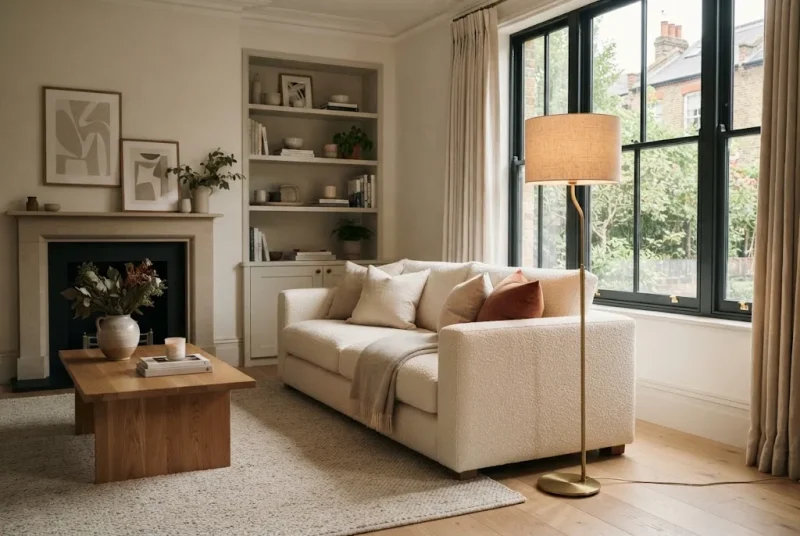
Placement can make as much difference as the lamp itself. One of the easiest locations is beside a sofa or armchair, particularly if the area is used for reading or relaxing.
A corner can also be an excellent position. An unused corner often looks dark because the main ceiling fixture does not distribute enough light around the perimeter of the room. A tall floor lamp can bring that area back into the overall lighting design.
You can also position a lamp beside a sideboard, reading chair, or entertainment area, provided there is enough clearance around the base and cable.
If your room already contains wooden side tables for living room furniture, consider how the lamp will work with the existing materials and proportions. A warm wood finish can pair naturally with a neutral fabric shade, while a metal lamp may provide contrast in a more contemporary interior.
Popular Styles of Living Room Lamp
Modern Floor Lamps
Modern floor lamps often feature simple silhouettes, clean lines, and restrained finishes. They work especially well in contemporary interiors where unnecessary decoration can make the room feel busy.
Arc lamps are another modern option. Their extended arm allows the shade to project over a sofa or chair, making them useful where placing a traditional lamp directly beside furniture is difficult.
Traditional Floor Lamps
Traditional designs can introduce a softer and more decorative character. Wooden bases, classic shades, curved details, and warm finishes are suitable for homes with conventional furniture or timeless décor.
Funky Lamp Designs
If your living room needs a stronger decorative feature, a funky lamp can become an accent piece rather than simply a source of illumination. Unusual shapes, sculptural bases, bold proportions, or distinctive shades can add personality to an otherwise neutral room.
The key is balance. If the lamp has an elaborate design, keeping surrounding accessories relatively simple can help the feature stand out without overwhelming the space.
Choosing the Right Lampshade
The lampshade affects both the appearance of the lamp and the way light spreads through the room. A light-coloured shade can create a brighter and softer effect, while darker materials can produce a more dramatic atmosphere.
Fabric shades are popular because they diffuse light and create a comfortable ambience. Glass shades can provide a cleaner, more contemporary appearance, while natural materials can complement relaxed or rustic interiors.
When selecting a shade, consider the base as well as the surrounding furniture. The shade should feel proportionate to the lamp stand and should not look noticeably too large or too small.
If you are also planning lighting elsewhere in the home, you may want to explore ideas for a bedside table lamp or light shade bedroom setup so that the overall lighting style remains consistent.
Should You Choose a Beige Lamp?
A beige lamp can be an excellent choice for living rooms built around neutral colours. Beige works comfortably with white, cream, brown, natural wood, grey, and many muted green tones.
Neutral lamps are particularly useful if you expect to change your furniture or wall colours in the future. Instead of matching a highly specific colour scheme, a beige finish can remain relevant as the rest of the room evolves.
However, neutral does not have to mean boring. Texture can make a significant difference. A woven shade, ceramic base, brushed finish, or subtly patterned material can give a beige lamp enough character to become an interesting decorative element.
Floor Lamp or Living Room Table Lamp?
Both options have a useful role, but they solve different lighting needs. A floor lamp takes up some floor space but can provide light from a greater height. This makes it useful for illuminating a wider area or adding height to a room.
A living room table lamp, on the other hand, works well on a console, side table, cabinet, or other raised surface. It creates a more concentrated pool of light and can be particularly effective for creating a cosy evening atmosphere.
For many rooms, the best solution is not choosing one or the other. Combining a floor lamp with table lighting creates layers that allow you to adjust the atmosphere according to the time of day.
How to Match a Tall Lamp With Your Furniture
Think about proportion before focusing on colour. A substantial sofa may need a floor lamp with a reasonably strong visual presence, while a compact room may benefit from a slimmer design.
Material is another important consideration. A wooden lamp base can complement timber furniture, while black or brass metal can work well with contemporary interiors. If your room already has several finishes, choosing a lamp that repeats one existing material can help the space feel coordinated.
For homes using several smaller pieces of furniture, a living room side table can provide another surface for decorative lighting without requiring a large floor-standing fixture.
Lighting Temperature Matters Too
The bulb you use can change the character of the room even when the lamp itself remains unchanged. Warmer light is generally associated with a relaxed, comfortable atmosphere, making it suitable for evenings and social spaces.
Cooler light can feel brighter and more functional, which may be useful for certain tasks. However, the ideal choice depends on the purpose of the lamp and the rest of your lighting.
If the floor lamp is mainly intended for reading, make sure it produces sufficient illumination around the chair. If it is primarily decorative, softer light may be more appropriate.
Common Mistakes to Avoid
One of the most common mistakes is buying a lamp without considering the dimensions of the room. A large decorative floor lamp may look impressive in a showroom but feel oversized in a compact living room.
Another mistake is ignoring the position of sockets. Before buying, check where the nearest power outlet is located and whether the cable can be routed safely without becoming a trip hazard.
It is also worth avoiding too many competing statement pieces. If you already have a dramatic sofa, large artwork, patterned rug, and several decorative accessories, a simpler lamp may produce a more balanced result.
Creating a Layered Living Room Lighting Scheme
A comfortable living room normally benefits from more than one type of lighting. Ambient lighting provides general illumination, task lighting helps with activities such as reading, and accent lighting draws attention to particular areas or decorative features.
A tall floor lamp can bridge the gap between ambient and task lighting depending on its design and position. Combine it with ceiling lighting and a table lamp to create several lighting levels that can be used independently.
For example, during daytime you may need only natural light and a small table lamp. During the evening, the ceiling fixture can provide general brightness while a floor lamp beside the sofa creates a softer area for reading or conversation.
Choosing the Right Lamp for Your UK Home
UK homes vary considerably in size and layout, from compact flats to large open-plan properties. Before buying a tall lamp for living room spaces, measure the available floor area and consider how people move through the room.
Safety should also be considered. Place the lamp on a stable surface, keep cables away from walkways, and follow the manufacturer’s instructions for bulbs and maximum wattage. If children or pets regularly use the room, a stable weighted base may be preferable to a lightweight decorative design.
For a cohesive home, you can also coordinate your living room lighting with bedroom fixtures. For example, bedside lamps UK shoppers can use similar materials or finishes to connect the lighting styles between different rooms.
Final Thoughts
The best tall lamp for living room spaces is one that combines appropriate proportions, useful illumination, attractive design, and practical placement. Instead of choosing a lamp purely because it looks good in a product photograph, consider how its height, shade, base, finish, and light output will work with your existing furniture.
A floor lamp can fill an empty corner, create a comfortable reading area, introduce visual height, or simply make the room feel warmer in the evening. Neutral choices such as beige can provide long-term flexibility, while distinctive designs can add personality to a simple interior.
Most importantly, think about your complete lighting scheme rather than treating each lamp as an isolated purchase. A well-positioned floor lamp combined with suitable table lighting, ceiling fixtures, and decorative shades can make your living room feel more functional and inviting.
Once you understand the available space, the purpose of the light, and the style you want to create, choosing the right floor lamp becomes much easier. Whether you prefer a minimalist design, a traditional shade, or a statement funky lamp, the right choice can become an important finishing touch in your living room.