Choosing the right door curtains UK homeowners can use is a simple way to add softness, privacy and character to a room. Whether you are dressing an external doorway, a glazed patio door or an internal opening, the right curtain can make the space feel warmer and more finished without requiring a major interior makeover.
Door curtains are available in many fabrics, colours and designs, so the best option depends on the type of doorway, the room’s existing décor and the practical result you want. Some homeowners prioritise privacy and light control, while others are mainly looking for a decorative feature or an additional layer against draughts.
Understanding the different options makes it easier to choose a door curtain that looks good and works properly within your home.
What Are Door Curtains?
A door curtain is a fabric window treatment designed to cover or frame a doorway. Unlike standard curtains fitted across a conventional window, door curtains need to work around movement and access, particularly when fitted to frequently used doors.
They can be used in several settings. A curtain might cover a glazed external door, separate two areas of a home or simply provide a decorative layer around an opening.
The most suitable design depends on how often the doorway is used. A curtain across a rarely used opening can be relatively decorative, while a frequently used door requires a practical design that can be moved easily.
Why Choose Door Curtains UK Homes?
There are several reasons homeowners consider door curtains UK properties can accommodate particularly well. Older homes may have larger door openings, period features or rooms where a softer window treatment helps balance harder architectural elements.
Door curtains can also introduce another layer of texture into an interior. This can be useful when a room contains smooth flooring, painted walls and contemporary furniture.
Depending on the fabric and construction, curtains can also contribute to privacy and light management. For external glazed doors, they may provide an easy way to reduce visibility into the room when the curtains are closed.
Choosing the Right Door Curtain
The right door curtain should be selected according to the doorway rather than simply the room’s colour scheme. Start by considering how the door opens, how frequently it is used and where the curtain will sit.
Think About How the Door Opens
A hinged door needs enough clearance for the curtain to move without becoming trapped or obstructing access. Sliding or patio doors have different requirements because the curtain may need to move horizontally alongside the opening.
Measure the available wall space around the doorway before choosing a pole or track. This is particularly important where furniture, shelving or other fittings are close to the door.
Consider the Curtain Weight
Lightweight fabrics can be easier to move when the doorway is used frequently. Heavier curtains may create a more substantial appearance and can be useful where privacy or warmth is a priority.
However, heavier fabric also requires suitable hardware. Make sure the curtain pole, track and fixings are appropriate for the weight of the finished curtain.
Door Curtains for External Doors
External doors can benefit from carefully selected curtains, particularly when they contain large areas of glass. A curtain provides another visual layer that can be opened during the day and closed when privacy is required.
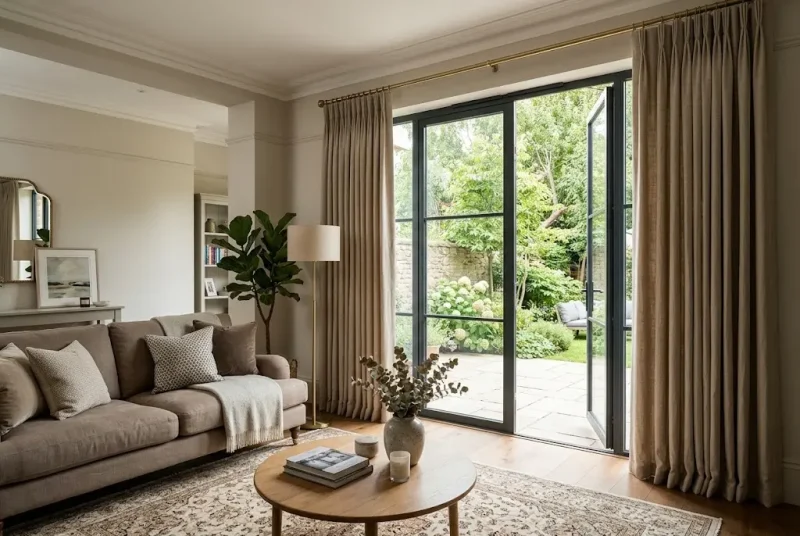
For patio or French doors, consider how the curtain will interact with handles and the opening mechanism. Floor-length curtains can create an elegant appearance, but the hem should not interfere with the door or become a trip hazard.
Thermally lined or heavier curtains may also be worth considering in rooms where heat retention is important. The Energy Saving Trust notes that heavy, lined curtains can be an affordable way to help keep heat inside a home, while draught-proofing can address unwanted gaps around older doors.
Using a Door Curtain to Reduce Draughts
One potential advantage of a substantial door curtain is that it can provide an additional barrier between the room and a cold doorway. This can be particularly relevant in older properties where external doors may not provide the same level of sealing as newer installations.
However, a curtain should not be treated as a replacement for proper draught-proofing. If cold air is entering through gaps around an older door, addressing the underlying gaps can be more effective.
The Energy Saving Trust recommends draught-proofing older draughty doors and notes that heavy, lined curtains can provide an additional low-cost measure for retaining warmth.
Good ventilation remains important too. Avoid blocking designed ventilation openings simply to prevent draughts, as this can contribute to poor indoor air quality.
How to Choose Colours for Door Curtains
Colour should complement the room rather than making the doorway look disconnected from the surrounding décor. Neutral shades such as cream, beige, taupe and soft grey are versatile choices for many interiors.
If the room is predominantly neutral, a darker or richer curtain can create an attractive focal point. Deep blue, green or warm earthy shades can add personality without requiring changes to larger pieces of furniture.
Patterned door curtains can also work well, but they are best used where the surrounding décor is relatively restrained. If the room already contains patterned wallpaper, rugs or upholstery, a plain curtain may provide better balance.
Coordinate Door Curtains With Other Soft Furnishings
Door curtains are easier to integrate when they share colours or textures with other soft furnishings. You do not need to match every item exactly. Instead, repeat a colour subtly through cushions, rugs, bedding or other accessories.
For example, a beige door curtain can complement neutral furniture while blue cushions introduce a small amount of contrast. Similarly, a patterned curtain can inspire the colour of decorative cushions without requiring identical patterns throughout the room.
If you are refreshing the bedroom at the same time, our guide to bedroom curtains drapes explores ways to coordinate window treatments with bedding, colours and bedroom décor.
For living areas, you can also explore our guide to living room curtains for ideas on using white, beige, blue and patterned curtains within a wider interior scheme.
Door Curtains for Internal Openings
Not every door curtain needs to cover an external doorway. Internal doorways and openings can also be dressed with fabric when you want to soften the transition between rooms.
An internal curtain can be useful in spaces where you want some visual separation without permanently closing the opening. It may also help create a more relaxed appearance in a traditional or cottage-style interior.
Choose a lightweight fabric if the curtain will be moved regularly. A simple pole or track can make the opening easy to use while still giving the room a decorative finish.
Choosing the Right Curtain Length
Curtain length should be based on the doorway, floor level and intended use. Floor-length curtains can look elegant, but they need to be positioned carefully around doors that open inwards or outwards.
For frequently used doorways, a practical length can make the curtain easier to operate and reduce the chance of the fabric catching underfoot. For decorative internal openings, you may have greater flexibility.
Always measure from the intended pole or track position rather than estimating from the door itself. This gives you a more accurate idea of how much fabric you need.
Door Curtains and Privacy
Privacy can be an important consideration when a glazed door faces a street, garden or neighbouring property. A curtain provides a simple way to control visibility when required.
For rooms that receive a lot of daylight, consider whether you want the curtain to remain relatively light and translucent during the day or provide stronger coverage when closed. The appropriate choice will depend on the location of the door and the room’s use.
Bedrooms and living rooms may have different privacy requirements, so there is no universal fabric or design that works for every doorway.
How Door Curtains Can Complement a Cosy Interior
Texture can make a significant difference to how comfortable an interior feels. If the rest of the room uses soft furnishings, textured curtains can reinforce the same visual theme.
For example, a bedroom featuring teddy bedding can use similarly soft-looking accessories to create a warm, layered atmosphere. The curtain does not need to match the bedding exactly; a related neutral or complementary shade may be more effective.
When updating a double bedroom, a coordinated double bed bedding set can also provide a useful starting point for selecting complementary curtain colours.
Practical Tips Before Buying Door Curtains
Before purchasing, measure the doorway and the available space around it carefully. Check whether the curtain will interfere with handles, hinges, furniture or other fittings.
Consider how frequently the door will be used. A curtain that looks beautiful but is difficult to move will quickly become inconvenient on a busy doorway.
It is also worth checking the manufacturer’s care instructions. Door curtains may experience more handling than conventional window curtains, particularly in busy family homes.
Finally, choose appropriate curtain hardware. The pole or track needs to support the fabric securely and should be installed according to the manufacturer’s guidance.
Final Thoughts on Door Curtains UK Homes
The right door curtains UK homeowners choose can combine style with useful everyday functionality. They can soften a doorway, improve privacy, add texture and provide another layer around an external opening.
Start by considering how the door is used, then select an appropriate fabric, colour, length and fixing system. If warmth is a concern, remember that curtains can complement proper draught-proofing rather than replace it.
Most importantly, make the curtain part of the wider interior scheme. Coordinating colours and textures with bedding, cushions and other window treatments can create a home that feels connected without looking overly matched.