Bringing a puppy home is one of life’s great joys, but those first few days can turn stressful very quickly if your house is not ready. Puppies explore the world with their mouths, which means cables, shoes, houseplants and cleaning products are all fair game in their eyes. Learning how to puppy-proof your home before your new arrival walks through the door saves you broken belongings, emergency vet trips and a great deal of frantic tidying. This room-by-room guide walks you through the checks that matter most, in the order most owners find easiest.
Start With a Puppy’s-Eye View
The single most useful thing you can do is get down on your hands and knees and crawl through each room slowly. Anything you can see at that height, your puppy can see too, and anything within reach will be chewed, swallowed or dragged away. Look for trailing cables, low shelves, open bins, dangling tablecloths and the gaps behind appliances where a small puppy can get stuck. Make a list room by room rather than trying to fix everything at once.
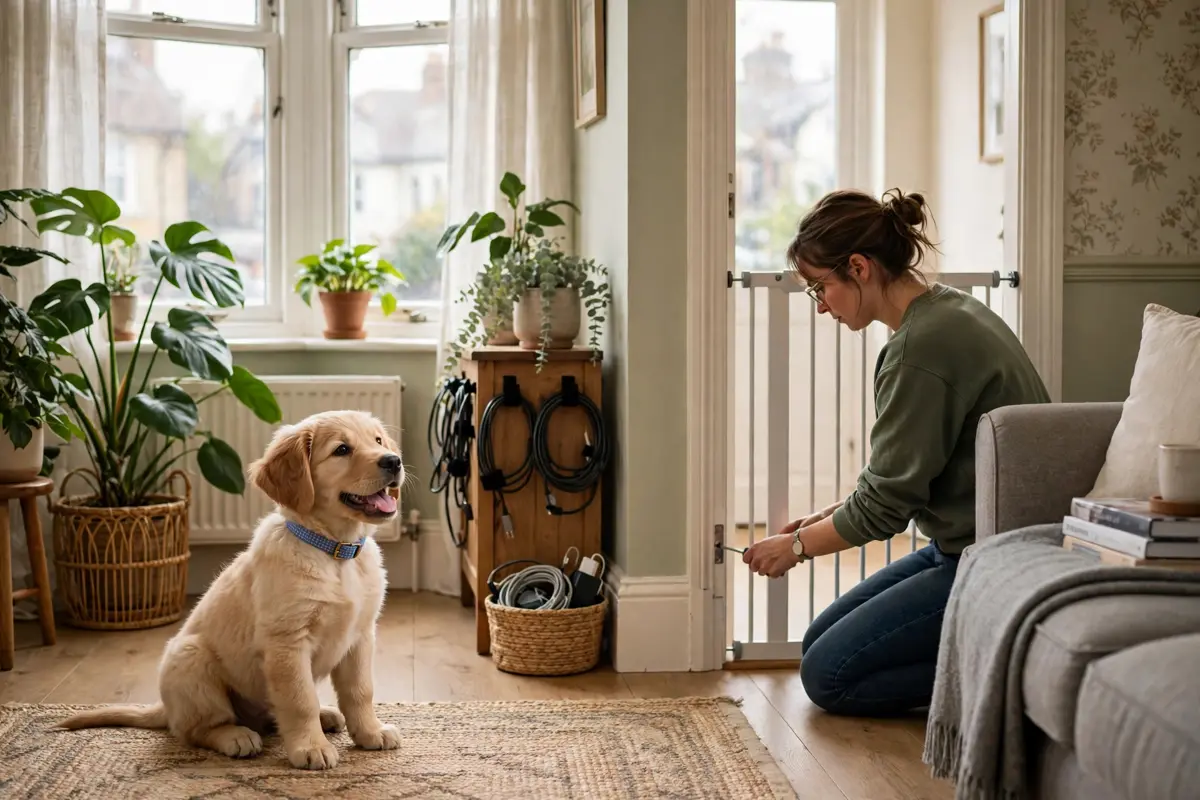
It also helps to decide which parts of the house are puppy zones for the first few weeks. A stair gate across the kitchen or hallway door creates a safe, easy-to-clean area while your puppy settles in. Many owners keep the dog in one or two rooms at first, then open up the rest of the house gradually as toilet training and chewing habits improve.
How to Puppy-Proof Your Home Room by Room
The living room
The living room usually holds the biggest concentration of hazards. Bundle electrical cables into cable tidies or run them behind furniture, and move phone chargers off the floor. Remote controls, reading glasses and TV remotes are classic chew targets, so give them a home in a drawer or a high shelf. Check your living room curtains and blind cords too: dangling cords are tempting to pull and can tangle around a puppy’s neck, so tie them up well out of reach or fit cord cleats.
Houseplants deserve a check as well. Several common indoor plants, including lilies, ivy and some palms, are harmful to dogs if eaten. Move any plant you cannot identify to a room the puppy cannot enter until you have checked it. Finally, scan sofas and armchairs for loose cushions and wooden legs, and accept that one corner may become a legal chew zone with its own toys provided.
The kitchen
Kitchens combine food smells, cleaning chemicals and hot surfaces, so this room needs firm rules. Fit child locks on cupboards that hold cleaning products, bin bags and dishwasher tablets, all of which are dangerous if swallowed. A pedal bin with a secure lid is far safer than an open one, because cooked bones, corn cobs and food packaging are among the most common reasons puppies end up at the vet.
Keep food off worktop edges, especially chocolate, grapes, onions and anything sweetened with xylitol, which is extremely toxic to dogs. When you cook, use the back rings of the hob where you can, and turn pan handles inwards so a growing puppy that learns to stand on its hind legs cannot pull a pan down.
Bedrooms and bathrooms
Bedrooms are full of small, swallowable items: socks, hair ties, coins, medication and cosmetics. Keep doors closed or fit gates, and be strict about laundry going straight into a lidded basket. Soft furnishings take a lot of chewing in the first months, so washable throws over bedding you care about are a sensible precaution while you decide on long-term pieces such as teddy bedding or other cosy sets.
In the bathroom, keep the toilet lid down, store medicines and razors in a cabinet, and never leave a puppy alone near a bath. Puppies can drown in surprisingly shallow water, and bathroom cleaning products are concentrated and highly toxic.
Hallways, stairs and the garden
Fit a stair gate before your puppy arrives rather than after its first attempt at the stairs; falls are a common cause of fractured legs in young dogs. In the hallway, create a fixed spot for shoes, post and school bags, because leather shoes in particular seem to be irresistible.
Outside, walk the fence line looking for gaps a small puppy can squeeze through, and check gates latch properly. Move slug pellets, antifreeze and fertilisers into a locked shed, since antifreeze tastes sweet to dogs and is lethal in tiny amounts. If you are already dreaming of trips away together once your puppy is older, our guide to pet-friendly holiday rentals shows what to look for in dog-welcoming places to stay.
Cables, Chemicals and Small Objects: The Hidden Hazards
Across the whole house, three hazard groups cause most accidents. The first is electrical: puppies chew cables out of curiosity and teething discomfort, so cover exposed runs with spiral wrap or trunking, and unplug chargers when they are not in use. The second is chemicals, from laundry pods to rat poison; if a product would worry you around a toddler, it is a danger to a puppy. The third is small objects: children’s toys, sewing kits, batteries and hair accessories should all live behind closed doors or in boxes with lids. Button batteries are a genuine emergency if swallowed, so treat them with particular care.
While you are doing safety rounds, include your heating in the checklist. A puppy that sleeps near a radiator needs the radiator working properly and not leaking, and autumn is the sensible moment to deal with cold spots; our step-by-step guide on how to bleed a radiator walks you through that small job before the cold weather arrives.
Set Up a Safe Space and a First-Week Routine
Puppy-proofing is not only about removing dangers; it is also about providing the right things in the right places. Set up a crate or pen with bedding, water and a rotation of chew toys in your puppy’s main room. Place a washable mat under the water bowl, keep a stock of old towels by the door for muddy paws, and decide where the puppy will sleep before the first night rather than improvising at midnight.
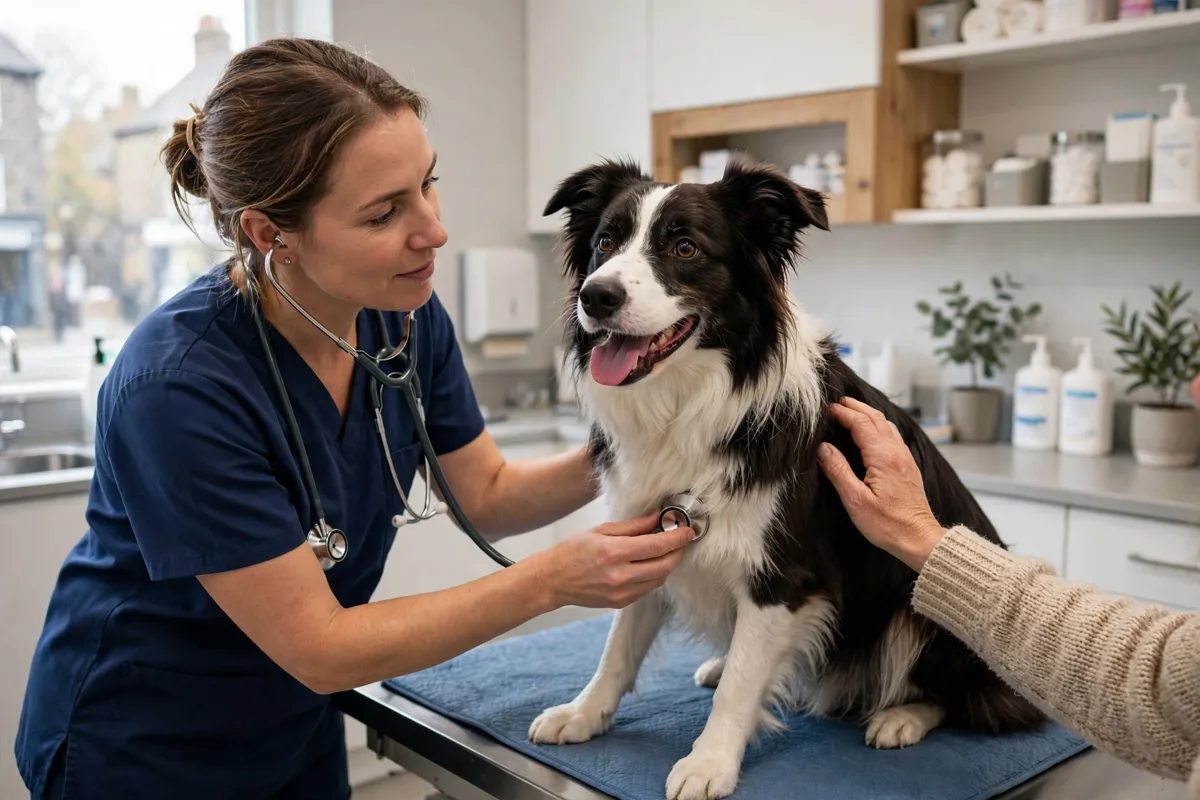
In the first week, book a vet check and get the basics in place: in the UK, dogs must be microchipped by law, and your vet will confirm vaccinations, flea and worm treatment, and feeding amounts. Reading up on choosing a veterinary clinic and what a good practice offers helps you know what questions to ask at that first appointment. Keep the routine simple at first: regular toilet trips to the garden, short play sessions, plenty of sleep, and quiet time so your puppy learns the house is a calm place.
Keep Reviewing as Your Puppy Grows
The home that is safe for an eight-week-old puppy is not automatically safe for a five-month-old who can reach the worktops and open cupboard doors with a paw. Re-run your puppy’s-eye check every few weeks, raise stored items higher, and replace outgrown toys before they break into swallowable pieces. Owners who treat puppy-proofing as a habit rather than a one-off job rarely face the emergency vet visit they fear, and their homes survive puppyhood with remarkably little damage. Work through the rooms methodically, keep the checklist somewhere visible, and you can spend your puppy’s first week enjoying the new arrival instead of chasing it away from cables.