If the top of your radiator stays cold while the bottom heats up, you almost certainly have air trapped inside it. The fix takes about ten minutes, needs a tool that costs a couple of pounds, and can make a sluggish heating system feel new again. Learning how to bleed a radiator is one of the simplest home maintenance jobs there is, and it is the first thing to try before you spend money on an engineer or assume your boiler is failing.
Why Radiators Need Bleeding
Your heating system is supposed to be full of water, but air finds its way in over time — through tiny joints, when the system is drained for repairs, or as a by-product of the water circulating through the boiler. Air rises, so it collects at the top of each radiator. Hot water cannot reach the space the air occupies, which is why an air-locked radiator feels warm at the bottom and cold at the top. The boiler works harder to heat the room, the room never quite gets comfortable, and you pay for heat that never arrives. Bleeding simply means opening a small valve at the top of the radiator and letting that trapped air escape.
The classic signs are easy to spot: a radiator that is cold at the top and warm at the bottom, gurgling or bubbling noises when the heating runs, and one or two rooms that never warm up properly while the rest of the house is fine. If a radiator is cold all over, the cause is usually something else — a closed valve, a stuck thermostatic radiator valve pin, or a wider system problem.
What You Need Before You Start
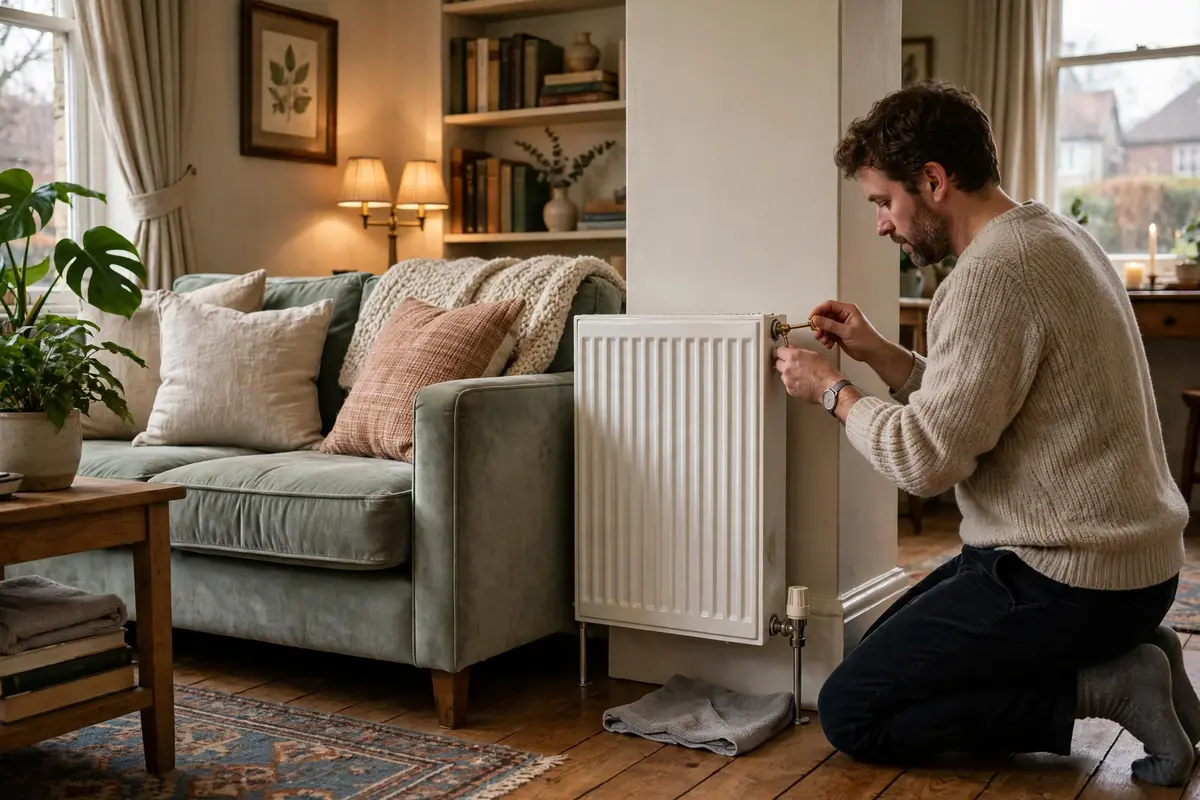
You do not need a toolbox full of equipment. Gather a radiator bleed key (the small square key sold in every hardware shop and most supermarkets), an old cloth or towel, and a small container to catch drips of water. If your radiators have a slotted bleed screw instead of a square one, a flathead screwdriver does the same job. Gloves are optional, but the water that comes out can be dirty, so keep the cloth between your hands and the valve.
How to Bleed a Radiator: Step by Step
Step 1: Turn the heating off and let the radiators cool. Bleeding a hot radiator risks scalding water and lets the pump push more air around the system. Switch the heating off and wait until the radiators are cool to the touch — half an hour is usually enough.
Step 2: Find the bleed valve. It sits at the top corner of the radiator, at one end — a small square or slotted screw inside a round fitting. On tall or designer radiators it may be on the back face, so check both top corners.
Step 3: Position your cloth and container. Hold the cloth under the valve and the container beneath it. The water that follows the air can be dark and can stain carpets and paintwork.
Step 4: Open the valve slowly. Fit the bleed key and turn anti-clockwise by a quarter to half a turn — no more. You should hear a hissing sound: that is the trapped air escaping. If water spurts out immediately with no hiss, the radiator had no air in it; close the valve and move on.
Step 5: Close the valve when water runs steadily. When the hissing stops and a thin, steady dribble of water appears, the air is out. Turn the key clockwise to close the valve — snug, but not forced, as overtightening can damage the seal.
Step 6: Repeat on the other radiators, then check the boiler pressure. Work through any other radiators with cold tops, starting with the ones furthest from the boiler. Bleeding releases pressure from the system, so afterwards check the gauge on your boiler (or the filling loop area on a combi). If it has dropped below the marked operating range — typically around 1 to 1.5 bar when cold — top it up using the filling loop following your boiler manual. If you pay for heating cover, this is also the kind of routine check worth confirming in whether service plans are worth it for your household.
Step 7: Turn the heating back on and check. Within twenty minutes the radiators should heat evenly from bottom to top. Run your hand (carefully) across each one you bled to confirm the cold patch has gone.
How Often Should You Bleed Radiators?
There is no fixed schedule. Bleed a radiator when you notice the cold-top symptoms, and give the whole system a quick check at the start of the heating season each autumn. If you find yourself bleeding the same radiator every few weeks, air is getting in faster than it should — that points to a leak, a failing pump or corrosion inside the system, and it is worth having an engineer look rather than topping up endlessly.
Bleeding Radiators on Different Heating Systems
The steps above cover most homes, but the details vary slightly with your system. With a combi boiler there is no separate hot water cylinder, and the pressure gauge sits on the boiler itself, so the top-up check in step 6 is part of the job every time. On an older gravity-fed system with a small feed-and-expansion tank in the loft, bleeding rarely affects pressure in the same way, because the tank refills the system automatically — but it is still worth checking the radiators heat evenly afterwards. Homes with a pressurised unvented cylinder sit somewhere in between: bleed as normal, and if the pressure gauge in the airing cupboard has fallen, follow the cylinder manual or call your usual engineer. Whichever system you have, the rule is the same: air out first, pressure check second, heating on last.
When Bleeding Is Not Enough
If a radiator is hot at the top but cold at the bottom, the problem is usually sludge — a build-up of rust and debris that settles low in the radiator. Bleeding will not fix that; a professional power flush or a chemical clean is the answer. If the radiator stays completely cold while others work, check that both valves are open and gently free the pin under the thermostatic valve head if it has stuck down over summer. Anything that involves opening the boiler itself, gas work or persistent pressure loss belongs to a Gas Safe registered engineer — bleeding radiators is a safe DIY job, boiler repairs are not.
Once your heating is running evenly again, the house tends to get the attention it deserves: it is a good moment to refresh the rooms you will actually be living in this winter, whether that is choosing cosy bedding for the colder months, updating small details like candle holders for darker evenings, or browsing quirky home decor ideas to make the space feel finished. Warm rooms first, though — and now you know exactly how to get them.