
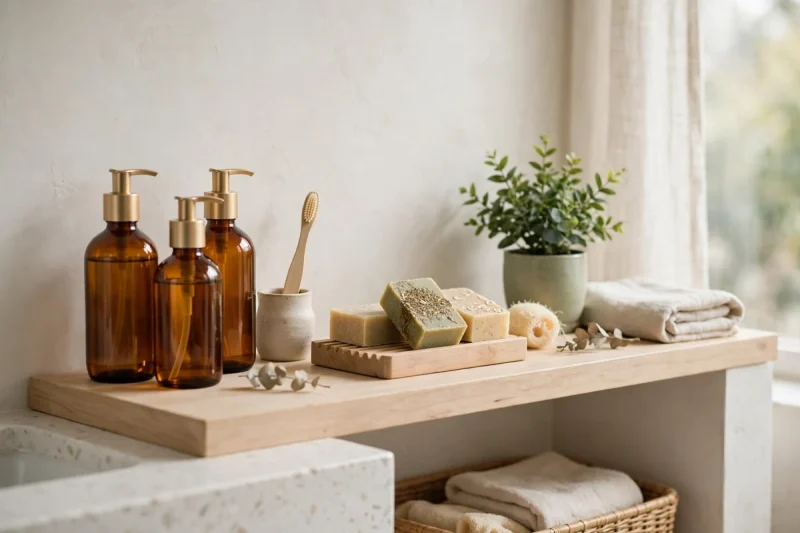
Sustainable beauty is not about throwing everything away and starting again. For UK readers, sustainable beauty means making calmer, better-informed choices. You buy less, you choose products you will actually finish, and you look closely at packaging, ingredients and claims before you spend. In short, it is a practical habit, not a perfect lifestyle.
That shift matters because beauty waste builds up in small, repeated ways. A half-used cleanser here and an impulse buy there soon fill a bathroom cabinet. However, small changes also add up. When you refill a bottle, finish a moisturiser or question a vague claim, you make your routine lighter on your purse and on the planet.
Key Takeaways
- Sustainable beauty starts with using what you already own, before you buy anything new.
- Good sustainable beauty packaging is easy to refill, reuse or recycle at home in the UK.
- Ingredient lists and clear sourcing information matter more than pretty, vague language.
- Greenwashing uses leafy images and empty words, so always look for specific evidence.
- Progress beats perfection. One steady habit is worth more than a complete, wasteful clear-out.
What Sustainable Beauty Really Means
At its simplest, sustainable beauty is about reducing waste and making thoughtful choices across the whole life of a product. That includes how it is made, how it is packaged, how you use it and what happens when it is empty. Therefore, it is much wider than one ingredient or one material.
For many shoppers, sustainable cosmetics are simply products they understand and value. You know what the product does, you know how to use it, and you are likely to finish it. By contrast, a product that sits unused is wasteful, however virtuous its label sounds. Usefulness is a quiet but powerful form of sustainability.
Likewise, eco friendly beauty is not a single look or price point. It can mean a solid shampoo bar, a refillable lipstick case or a simple moisturiser in a widely recyclable pot. The common thread is intention. You choose with care, you use the product fully, and you dispose of the packaging responsibly when you can.
Packaging, Refills and Reuse
Packaging is often the most visible part of the problem, so it is a sensible place to start. Sustainable beauty packaging should protect the product, carry clear information and avoid unnecessary layers. A box inside a box, wrapped again in film, rarely helps anyone. Simple, sturdy packaging usually does the job well.
Next, look at the end of the story. Can you refill the container, reuse it at home or recycle it through your normal household collection? Clear instructions help a lot here. If a brand cannot explain what to do with an empty pot, that silence tells you something important.
Why Refills Can Help
Refills keep a good container in use for longer, which is the heart of zero waste beauty in everyday life. A refill pouch or in-store refill still creates some waste, of course. Yet it usually avoids a whole new pump, lid and bottle each time. Refills also encourage loyalty to products that genuinely suit you.
Still, refills only work when you will buy the same product again. So test the product first, check that refills are easy to find, and make sure the container is simple to clean. A refill system you abandon after one use helps nobody.
Choosing Better Packaging Day to Day
Prefer products with less packaging, and choose larger sizes only when you know you will finish them. Avoid mixed materials that are hard to separate, where you have a real choice. Also, keep and reuse sturdy pots and bottles for travel or storage, rather than buying extra organisers you do not need.
Ingredient Sourcing in General Terms
Ingredients matter too, but this topic needs calm, general thinking rather than fear. A responsible brand should be open about what is in its products and where key ingredients come from. It should also explain its choices in plain language, instead of hiding behind long, impressive-sounding lists.
Natural does not automatically mean better, and synthetic does not automatically mean worse. Some natural ingredients need careful sourcing, land and water, while some lab-made ingredients can be efficient and consistent. Therefore, judge sustainable skincare by evidence, transparency and how the product behaves on your skin, not by one fashionable word.
If you are rethinking sustainable skincare, our guide to natural skincare for dark spots is a useful reminder that patience and consistency matter more than constantly switching products. Chasing a new miracle ingredient every month wastes money and product alike.
Finally, remember that green beauty should still be safe and effective beauty. Read the ingredient list, follow the directions, and patch test new products as advised. A product you react to and throw away is not a sustainable purchase, whatever its intentions were.
Use It Up Before You Replace It
The most sustainable product is often the one already in your cabinet. Before you buy a replacement, ask a simple question: have I finished what I own? If a cleanser still has weeks left in it, use those weeks. You will save money, clear space and learn what you truly enjoy using.
This habit also slows down impulse buying. Trends move fast, and it is easy to feel that your routine is suddenly out of date. Our article on how beauty trends shape the way we see ourselves explores that pressure well. A short pause before buying often breaks it.
Try a few simple tactics. Keep one product per job open at a time, and store spares in one place so you can see them. Cut tubes open only where it is safe to do so, and use a small spatula for pots. Write the opening date on a label if that helps you rotate products sensibly.
Of course, do not use products that have changed smell, colour or texture, or that are past their stated period after opening. Sustainable habits should never override basic safety. Finish what is safe and pleasant to use, and let the rest go without guilt.
Circular Thinking and Your Footprint
Circular beauty is about keeping materials and products in use for as long as possible. Instead of a straight line from shop to bin, circular beauty looks for loops: refill, reuse, repair where possible, and recycle what remains. It is a mindset as much as a system.
That mindset also helps you think about your beauty carbon footprint without obsessing over it. Making, packaging and transporting products all use energy and resources, as does heating water and disposing of waste. You cannot measure every step yourself, and you do not need to. Buying less, choosing durable formats and finishing products all point in the right direction.
The same choose-well thinking applies beyond the bathroom shelf. Around the home, buying fewer, better things and using them for years is a familiar idea, and our guide to home decor accessories makes a similar case for quality over quantity. When your home and your beauty routine share one calm approach, both feel easier to manage.
How to Spot Greenwashing
Greenwashing is marketing that makes a product sound greener than the evidence supports. It is common because it works: soft colours, leaves and kind words create a warm feeling quickly. However, feelings are not evidence. Your job is to look gently but carefully behind the imagery.
Start with vague language. Words such as pure, clean, earth-friendly or natural mean very little without detail. Then check what is missing. Does the brand explain its packaging, its sourcing and its disposal advice? Does it talk about one small feature while staying silent about everything else?
- Vague claims: kind words with no definition, evidence or detail behind them.
- Hidden trade-offs: one green feature highlighted while larger impacts stay unmentioned.
- Imagery over information: forests and leaves on the pack, but little useful text.
- Irrelevant claims: boasting about something that is already required or expected.
- No proof: no clear explanation you can check on the brand website or label.
By contrast, honest brands sound specific and sometimes even modest. They explain what they have changed, what they are still working on and how you should dispose of the packaging. That honesty is reassuring. Perfect claims, on the other hand, should make you pause and ask a few more questions.
A Simple, More Sustainable Routine
You do not need a complicated routine to practise sustainable beauty well. Begin with the basics you use daily, such as cleansing, moisturising and sun protection, and make those choices count. Then simplify the extras. Fewer, well-chosen steps are easier to keep up, and easier routines create less waste.
Next, shop from a list rather than from a mood. Note what is running low, check your spares, and only then replace what you need. If you can, choose refillable or easily recyclable formats for those regular staples. Over time, this steady pattern does more good than an occasional dramatic overhaul.
Finally, review your cabinet every few months. Move older products to the front, pass on unopened spares that someone else will genuinely use, and recycle empties correctly. Small, regular tidying keeps waste visible and manageable, and it reminds you how much you already have.
Frequently Asked Questions
What is the easiest way to start with sustainable beauty?
Start by finishing what you already own. Then replace one everyday staple with a refillable or easily recyclable option when it runs out. This gradual approach avoids waste, saves money and helps you build habits that actually last.
Is zero waste beauty realistic for most people?
Completely waste-free beauty is difficult for most households, and that is fine. Treat zero waste beauty as a direction rather than a test. Refilling, reusing and recycling where you can will still reduce waste meaningfully over time.
How can I tell if a green beauty claim is trustworthy?
Look for specific, checkable detail about ingredients, sourcing, packaging and disposal. Trust brands that explain their limits as well as their progress. If a claim relies only on images and vague words, treat it with healthy caution.
Does sustainable beauty have to cost more?
Not necessarily. Some refillable or solid formats cost more at first, yet the biggest saving comes from buying less overall. Finishing products, avoiding duplicates and resisting impulse buys usually matter more than the price of any single item.
Final Thoughts
Sustainable beauty is not a competition and it is not about perfection. It is about attention: to what you buy, what you finish and what you throw away. Choose clearer claims, simpler packaging and products you truly value. Then keep going, one finished bottle and one thoughtful replacement at a time.