AI leadership in beauty is no longer a futuristic idea — it is already changing how salons, brands and retailers work. From skin analysis apps to demand forecasting and personalised product recommendations, artificial intelligence is reshaping decisions that used to rely on guesswork. This guide explains what AI leadership in beauty actually means, where it helps most, where it needs human judgement, and how beauty professionals can lead the change rather than be led by it.
The key point is simple: AI works best in beauty when it supports professionals, not when it replaces them. The leaders who succeed with it are the ones who understand both the technology and the client in the chair.
Where AI Helps Most in Beauty
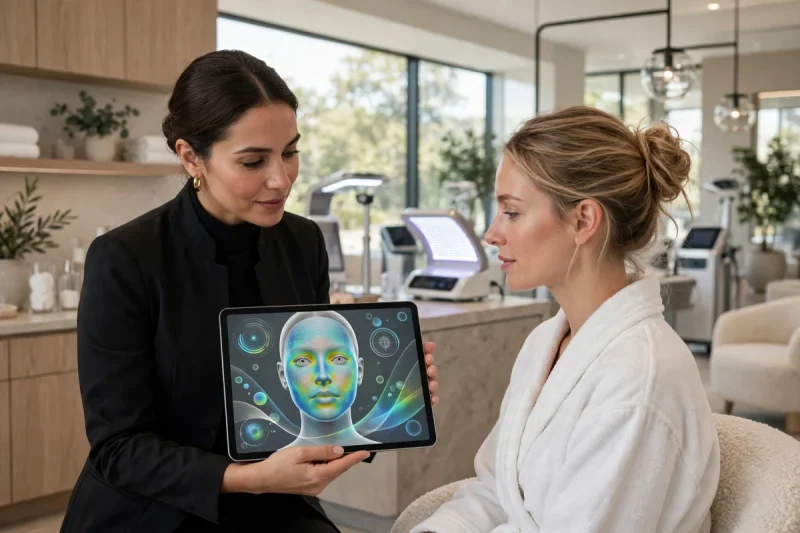
The strongest uses of AI in beauty are practical, not glamorous. Skin analysis tools can assess hydration, pigmentation and texture from a photo, giving practitioners a consistent starting point for consultations. Inventory systems can predict which products will sell and when, reducing waste and stockouts. Booking platforms can fill quiet hours and remind clients about appointments. Recommendation engines can suggest products matched to a client’s history rather than generic bestsellers.
Each of these saves time or improves accuracy, and each works because it handles data at a scale humans cannot. A practitioner who uses AI analysis as the beginning of a consultation — not the verdict — gets the best of both worlds: consistent information plus human judgement about what the client actually wants.
Leading AI Adoption: Start With a Problem, Not a Product
Beauty businesses often adopt AI backwards: they buy a tool, then look for a use for it. Leaders do the opposite. They start with a real problem — missed appointments, inconsistent consultations, wasted stock — and ask whether AI solves it better than a simpler change. If the answer is no, they do not buy the tool. This discipline matters because AI products are sold with great enthusiasm and vague promises, and the cost of a wrong purchase is not only money but staff trust.
When you do adopt a tool, pilot it small: one service, one team, a few weeks, with clear measures of success. Train staff properly and listen to their feedback, since they will spot problems — awkward workflows, inaccurate results, unhappy clients — before any dashboard does. AI leadership means owning the decision, including the decision to stop using a tool that does not help.
Trust, Privacy and the Human Touch
AI in beauty raises real questions about trust and privacy. Skin photos, health information and purchase histories are sensitive data, and clients deserve to know what is collected, where it goes, and how long it is kept. Leaders should choose suppliers with clear data policies, explain data use to clients in plain language, and never let an algorithm make sensitive decisions — such as diagnosing a skin condition — without qualified human oversight.
The human touch is also a competitive advantage. Clients come to beauty professionals for judgement, reassurance and care that no app provides. The businesses that thrive will use AI to remove routine work so professionals can spend more time on clients, not less. If a tool makes the experience feel colder or more transactional, it is working against the business, however clever it is.
Measuring Whether AI Is Working
AI projects fail quietly when nobody measures them. Before any pilot, decide what success looks like in numbers a non-technical person can understand: fewer no-shows, shorter consultation times, less wasted stock, higher rebooking rates, or better client satisfaction scores. Track those numbers before and after the change, and compare honestly. If the tool improves them, expand its use gradually. If it does not, say so and stop — sunk cost is not a reason to keep paying for something that does not help. Be especially careful with vendor-reported results, which usually describe ideal conditions rather than your salon on a busy Saturday. Your own measurements, however modest, are worth more than any sales presentation, because they reflect your clients, your team and your prices.
Building AI Skills in a Beauty Team
AI leadership is also a people question. Teams need basic fluency: what AI can and cannot do, how to interpret its outputs, and when to override them. That fluency comes from short, practical training and from leaders who use the tools themselves rather than delegating understanding to vendors. Hiring matters too — as beauty businesses grow more technical, the ability to work with data and systems becomes as valuable as traditional craft skills.
For context on how technology changes businesses more broadly, our guide to scaling IT growth and our look at systematic technology for streamlining operations explain the same principles in other sectors. And because AI works best alongside sustainable, trusted practice, our practical guide to greener beauty choices remains a useful companion. The digital marketing playbook for high-growth businesses is also worth reading for how technology-led growth is planned and measured.
AI leadership in beauty rewards the same qualities as any leadership: curiosity, honesty about limits, care for clients, and the patience to pilot before scaling. Learn the tools, protect trust, keep humans at the centre — and AI becomes a genuine advantage rather than another expensive distraction. Start small, measure honestly, and let results — not vendor promises — decide what stays.
A Final Word on Leading Change
Change is easier to lead when it is introduced gradually and explained honestly. Tell your team what a new tool is for, what it will change about their day, and what will happen if it does not work. Invite scepticism early — the colleague who questions a new system often spots the flaw that saves you money. Celebrate small wins when a pilot helps, and be open about what you learned when it does not. Leaders who treat AI as an experiment to learn from, rather than a verdict to defend, build teams that adapt confidently to whatever comes next.