
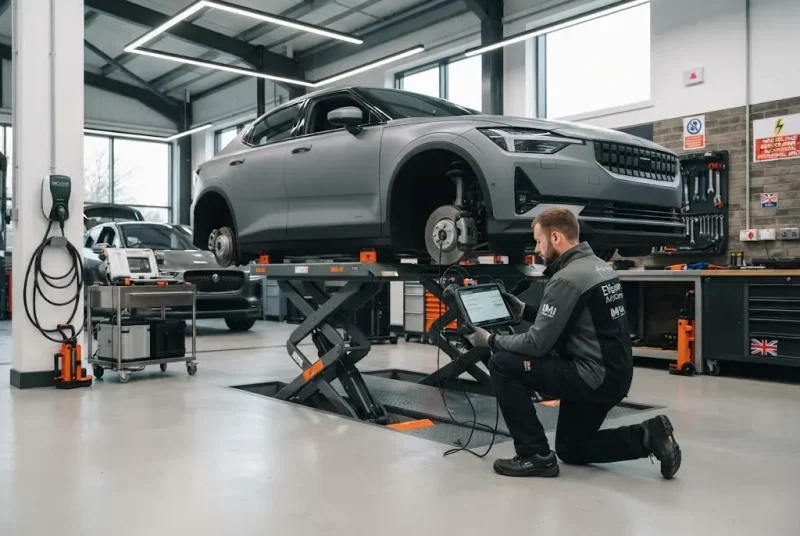
EV servicing is an important part of keeping an electric vehicle safe, reliable and ready for everyday driving. Electric cars have fewer conventional drivetrain components than petrol or diesel vehicles, but they still contain tyres, brakes, suspension, steering, cooling systems, electronic equipment and high-voltage components that require appropriate maintenance.
The way an electric vehicle is serviced is also different from a conventional car. There is no engine oil to replace, and many traditional engine components simply do not exist. However, that does not mean an EV can be driven indefinitely without professional inspections.
For UK electric vehicle owners, the key is choosing a workshop with the right training, equipment and understanding of EV technology. This guide explains what electric vehicle maintenance involves and what to consider before booking a service.
What Is EV Servicing?
EV servicing involves inspecting and maintaining the systems and components used by an electric vehicle. The exact requirements vary according to the manufacturer’s recommended schedule and the specific model.
Unlike a conventional vehicle service, an EV service normally focuses less on engine-related maintenance and more on the electric drivetrain, battery-related systems, brakes, tyres, suspension, steering, cooling systems and electronic controls.
Manufacturers set their own maintenance schedules, so owners should always check the vehicle handbook or official service information before deciding when maintenance is due.
Government guidance also makes clear that drivers remain responsible for ensuring their vehicles are safe and roadworthy, even when they have a current MOT certificate. GOV.UK vehicle safety guidance recommends regular checks of areas including tyres, lights and brakes.
Why EV Servicing Matters
Electric vehicles are designed with relatively simple drivetrains, but they still require regular attention. Wear and tear can affect components that are common to almost every type of car.
Tyres can wear, brake components can deteriorate, suspension parts can develop faults and steering systems can require inspection. An EV may also have sophisticated electronic systems that need professional diagnostics when warning messages appear.
Regular maintenance provides an opportunity to identify these issues before they become more serious. It also helps owners maintain a clear service history throughout the vehicle’s life.
What Is Checked During EV Servicing?
The precise inspection depends on the manufacturer and model, but several areas are commonly relevant.
Tyres
Tyres are particularly important on electric vehicles because EVs can deliver strong and immediate torque. Vehicle weight can also influence tyre wear.
Technicians should check tyre condition, tread, inflation and signs of uneven wear. Drivers should also follow the manufacturer’s recommended tyre specifications rather than selecting replacements solely on price.
If a vehicle develops uneven tyre wear or begins pulling to one side, a workshop may need to investigate steering geometry and wheel alignment rather than simply replacing the affected tyre.
Brakes
Electric vehicles use regenerative braking to recover energy during deceleration. This can reduce how frequently conventional friction brakes are used, but brake components still need regular inspection.
Brake discs, pads, callipers and associated components can deteriorate through age, corrosion or limited use. A professional inspection can help identify problems before they affect braking performance.
Suspension and Steering
Suspension and steering systems remain essential regardless of the type of powertrain. Bushes, dampers, springs, steering components and wheel alignment can all affect handling and tyre wear.
Unusual noises, vibration, uneven tyre wear or changes in steering behaviour should be investigated promptly rather than ignored.
Cabin Filters and Climate Systems
Electric vehicles still use heating, ventilation and air-conditioning systems. Depending on the model, cabin or pollen filters may need periodic replacement.
Some EVs also use dedicated thermal management systems to control temperatures for the battery and other electrical components. The correct maintenance procedure varies by vehicle, so technicians should follow manufacturer instructions.
EV Battery Servicing
The high-voltage traction battery is one of the defining components of an electric vehicle. However, battery servicing does not normally mean routinely replacing the complete battery pack.
Instead, technicians may use diagnostic equipment to investigate battery-related warnings, assess system information and identify faults. The exact checks depend on the vehicle manufacturer and the reason for inspection.
High-voltage battery systems require specialist knowledge and safety procedures. GOV.UK’s MOT inspection guidance notes that propulsion batteries in electric and hybrid vehicles carry high voltage and require additional care during inspection.
For this reason, owners should never attempt to open or repair high-voltage battery systems themselves unless they have the appropriate professional training and equipment.
Do Electric Cars Need Engine Oil?
Fully electric vehicles do not have conventional internal combustion engines, so they do not require engine oil changes in the way petrol and diesel cars do.
However, this does not mean every EV has no lubricants or fluids. Some models use lubricants in reduction gearboxes, while cooling systems may use coolant to manage temperatures in battery and electrical components.
The maintenance requirements vary considerably between models. Owners should therefore follow the manufacturer’s service schedule rather than assuming that all electric vehicles use exactly the same maintenance system.
Choosing the Right EV Mechanics
One of the most important decisions an EV owner can make is choosing a suitable workshop. Electric vehicles contain high-voltage systems that require appropriate training, tools and safety procedures.
Ask About EV Training
Before booking, ask whether the technicians have appropriate training for electric vehicle systems. This is especially important if the vehicle requires work involving the high-voltage drivetrain or battery.
Check Diagnostic Equipment
Modern EVs depend heavily on electronic control systems. A capable workshop should have suitable diagnostic equipment for the vehicle and technicians who understand how to interpret diagnostic information.
A fault code alone does not necessarily identify the component that needs replacing. Proper diagnosis can involve additional testing and inspection.
Confirm High-Voltage Capability
Routine tyre or brake work does not necessarily require direct access to high-voltage components. However, battery, inverter, charging or electrical drivetrain problems can require specialist procedures.
Ask the workshop whether it can safely handle the specific job before arranging the appointment.
EV Servicing at Independent Garages
Electric vehicle owners do not necessarily need to use a manufacturer’s dealership for every maintenance task. Independent garages are increasingly becoming part of the EV service market.
However, capabilities vary. A garage that can replace tyres and brake components on an EV may not necessarily be equipped to diagnose a high-voltage battery fault.
When comparing automotive service companies, consider the exact service required rather than assuming that every workshop has the same EV capabilities.
For routine maintenance, an appropriately equipped independent garage may be a practical option. For complex manufacturer-specific faults, a specialist or authorised workshop may be more suitable.
EV Servicing and Charging Infrastructure
Charging equipment is another important part of electric vehicle ownership, although home charging equipment and vehicle servicing are separate areas of maintenance.
Drivers using home or workplace charging equipment should follow the equipment manufacturer’s instructions and use properly installed equipment. UK government guidance for qualifying chargepoints sets technical requirements for charging equipment and includes provisions concerning servicing and maintenance.
If a vehicle repeatedly fails to charge, displays a charging-related warning or behaves unusually while connected, the problem may involve the vehicle, charging cable, chargepoint or electrical supply. Professional diagnosis can help identify where the fault originates.
How Often Does an EV Need Servicing?
There is no single service interval that applies to every electric vehicle. Manufacturers specify maintenance schedules according to the model and its components.
Some EVs may require inspections at intervals similar to conventional cars, while the actual list of maintenance tasks can be shorter because the vehicle has fewer moving drivetrain components.
The owner’s handbook should therefore be the first source when determining when the next service is due. If the vehicle is under warranty or subject to a manufacturer maintenance programme, owners should also check the applicable requirements.
Common EV Maintenance Issues
Although electric vehicles have simpler drivetrains, they are not maintenance-free. Several areas deserve regular attention.
- Tyre condition, pressure and tread.
- Brake pads, discs and other braking components.
- Steering and suspension systems.
- Cabin or pollen filters where applicable.
- Cooling and thermal management systems.
- 12-volt battery condition.
- Charging equipment and charging-related faults.
- High-voltage system warnings.
- Electronic diagnostics and software-related issues.
The AA similarly notes that EV components such as tyres, brakes and windscreen wipers still require regular checks, while cooling system requirements vary between models.
Warning Signs That an EV Needs Attention
Electric vehicles can display warning messages when a system detects a problem. Owners should take these warnings seriously, particularly when they relate to braking, charging, battery performance or the high-voltage system.
Other signs can include unusual noises, steering changes, vibration, reduced performance, abnormal tyre wear or repeated charging problems.
The UK’s Highway Code guidance advises motorists not to ignore warning displays because they can indicate a developing fault.
If a warning indicates a potentially serious fault, consult the vehicle’s handbook and seek professional assistance rather than continuing to drive without understanding the issue.
EV Servicing and MOT Testing
EV servicing and MOT testing are different processes. A service is designed to maintain the vehicle according to its maintenance requirements, while an MOT assesses whether the vehicle meets the applicable legal standards at the time of testing.
Electric vehicles are still subject to MOT requirements where an MOT is legally required for their age and type. The inspection includes relevant vehicle safety components, including electrical and battery-related areas where applicable.
Keeping the vehicle maintained throughout the year is therefore important. An MOT should not be treated as a replacement for routine servicing.
How to Prepare for an EV Service
Drivers can make a service appointment more useful by providing the workshop with accurate information about the vehicle.
Tell the technician about warning messages, charging problems, unusual noises, changes in range or any recent repairs. If the vehicle has a recurring problem, explain when it occurs and under what driving or charging conditions.
It is also helpful to bring service documentation when available. Previous invoices and maintenance records can give technicians useful background information and help establish what has already been inspected or replaced.
EV Servicing and Long-Term Ownership
Maintaining an electric vehicle properly can make ownership more predictable. While the drivetrain may require fewer conventional maintenance tasks, the rest of the vehicle still needs attention.
Tyres, suspension, steering and brakes contribute directly to safety. Battery and electrical systems require specialist care when faults occur. Charging equipment also needs to remain in good working condition.
For drivers considering the wider transition from conventional vehicles to electric transport, understanding these differences can make EV ownership easier and help them choose appropriate service providers.
The Future of Electric Vehicle Maintenance
Electric vehicle technology continues to develop, and automotive workshops are adapting alongside it. As EV ownership grows, more technicians are gaining specialist training and more service businesses are investing in diagnostic equipment and high-voltage safety capabilities.
Government guidance states that EV technology, vehicles and charging infrastructure have developed rapidly in recent years, reflecting the wider shift towards electric transport in the UK.
This transition means that EV servicing is becoming an increasingly important part of the wider automotive service industry. Drivers can expect workshops to develop broader capabilities as electric vehicles become a more established part of the UK’s vehicle fleet.
Final Thoughts on EV Servicing
EV servicing is different from conventional car servicing, but electric vehicles still need regular professional maintenance. Their reduced number of drivetrain components does not remove the need to inspect tyres, brakes, suspension, steering, cooling systems and electronic equipment.
The most important consideration is choosing a workshop with the appropriate knowledge and equipment for the work required. Routine maintenance may be suitable for a capable independent garage, while high-voltage battery or electrical drivetrain problems may require specialist EV mechanics.
By following the manufacturer’s maintenance schedule, responding to warning signs and using appropriately trained technicians, UK electric vehicle owners can maintain their cars more confidently and safely over the long term.