Choosing the right light shade bedroom design can transform the atmosphere of a bedroom without requiring a complete interior makeover. A ceiling shade is more than a practical way to cover a bulb; it can become an important decorative feature that influences how light spreads across the room and how the entire space feels.
From soft fabric shades to contemporary pendant designs, UK homeowners have plenty of options to consider. The best choice depends on your bedroom size, ceiling height, existing furniture, colour scheme, and the type of atmosphere you want to create. A carefully selected shade can soften harsh illumination, add visual interest, and complement other bedroom lighting.
Why Choose the Right Light Shade for a Bedroom?
Bedrooms benefit from lighting that feels comfortable and relaxing rather than excessively harsh. A suitable shade can diffuse the light from a bulb, helping to create a softer environment during the evening while still providing enough general illumination for everyday use.
The shade also occupies a prominent position in the room. Because it hangs or sits at ceiling level, it naturally attracts attention. This means its shape, material, colour, and size should work with the rest of the décor rather than being treated as an afterthought.
If you are creating a complete bedroom lighting scheme, consider how the ceiling fixture will work alongside a bedside table lamp. Combining overhead and bedside lighting gives you greater control over brightness and atmosphere.
How to Choose a Light Shade Bedroom Design
Start by looking at the dimensions of the room. A large shade can make a spacious bedroom feel balanced, but the same design may overwhelm a compact bedroom. Conversely, an extremely small shade can disappear visually in a large room.
Ceiling height is equally important. Rooms with low ceilings may benefit from compact flush or semi-flush designs, while bedrooms with higher ceilings provide more freedom to use pendant-style fixtures and larger shades.
Next, consider the existing décor. A neutral bedroom can accommodate a more distinctive shade, while a room with patterned wallpaper, bold bedding, or decorative furniture may look better with a simpler ceiling fixture.
Popular Hanging Light Shades
Hanging light shades are particularly useful when you want the ceiling fixture to become a decorative focal point. Pendant-style designs can introduce height and character while directing light toward the centre of the room.
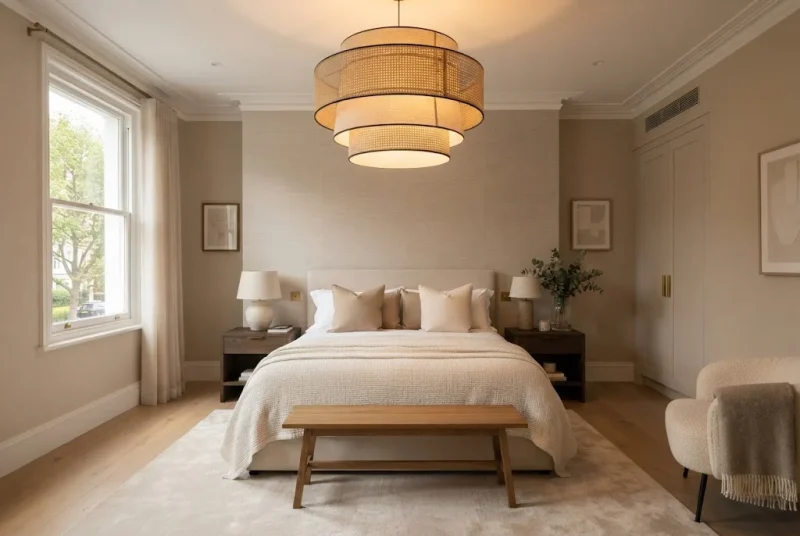
Fabric pendant shades are popular for bedrooms because they can soften the light and create a cosy appearance. Natural materials such as woven fibres can introduce texture, while glass and metal can produce a cleaner contemporary effect.
When choosing a hanging shade, make sure its hanging height works with the room and furniture. A fixture positioned too low can interfere with movement, while one that sits too high may lose some of its decorative impact.
Ceiling Shades for Different Bedroom Styles
Modern Bedrooms
Modern bedrooms often work well with simple geometric shades. White, black, neutral, and metallic finishes can complement contemporary furniture without competing with it.
If your bedroom already includes clean lines and minimalist furniture, a simple ceiling shade can reinforce the aesthetic. Alternatively, a sculptural shade can provide a statement feature against an otherwise understated background.
Traditional Bedrooms
Traditional interiors can benefit from fabric shades, classic silhouettes, soft neutral colours, and subtle decorative details. These options can complement wooden furniture and conventional bedroom furnishings.
The aim is not necessarily to match every item. Instead, choose a shade that repeats one or two existing colours or materials so that the overall room feels connected.
Scandinavian-Inspired Bedrooms
Natural textures and restrained colours are useful for Scandinavian-style interiors. A woven or light-coloured shade can complement pale walls, natural timber, and simple bedding.
This approach works particularly well when you want the bedroom to feel bright and uncluttered.
Should You Choose a Fabric Bedroom Light Shade?
Fabric shades are a popular option because they can make artificial lighting feel softer. Depending on the material and colour, they can diffuse light throughout the room while adding warmth to the interior.
White and cream shades tend to create a bright, understated appearance. Beige can introduce warmth without becoming visually dominant, making it a flexible option for neutral bedrooms.
If you already use neutral lighting elsewhere in the home, a coordinated bedside lamps UK arrangement can help create a consistent interior style.
Choosing the Right Colour
The colour of a ceiling shade should work with the bedroom’s overall palette. A neutral shade is generally easier to coordinate, while a stronger colour can be used as an accent.
White is particularly versatile because it can blend into a white ceiling or create a clean contrast against darker walls. Beige and cream can make a room feel warmer, while darker shades can create a more dramatic appearance.
Green can also work well in bedrooms inspired by nature. If you use green as an accent, consider carrying the tone into smaller details rather than making every element the same colour.
How Size Affects Your Bedroom Lighting
Size is one of the most important considerations when choosing a light shade bedroom fixture. The shade should have enough visual presence to suit the room without dominating it.
Before buying, measure the space and consider the position of the bed, wardrobes, doors, and other furniture. A large pendant directly above a bed can look striking, but it needs sufficient ceiling height and an appropriate hanging position.
In smaller bedrooms, a compact shade may be more practical. A streamlined design can provide sufficient lighting while maintaining clear visual space.
Matching a Bedroom Shade With Bedside Lighting
Bedroom lighting looks more cohesive when the ceiling shade and bedside lamps share some visual connection. They do not need to be identical. Similar colours, materials, or shapes can be enough.
For example, a neutral ceiling shade can be paired with a ceramic bedside lamp. A metallic ceiling fixture might work alongside gold bedside lamps, while a natural woven shade can complement wooden furniture.
If you prefer symmetrical furniture arrangements, two bedside table lamps can balance the main ceiling fixture and create a polished appearance.
Light Shade Bedroom Ideas for Small Rooms
Small bedrooms require careful consideration because every visual element can affect how spacious the room feels. Avoid choosing a shade that extends too far downward if the ceiling is already low.
Light colours can help maintain an airy appearance, while compact shapes can reduce visual clutter. A simple ceiling shade combined with small bedside lighting can provide sufficient illumination without filling the room with competing fixtures.
Reflective surfaces such as mirrors and pale walls can also help distribute available light. This can make a small bedroom feel brighter without relying entirely on a powerful bulb.
Bedroom Ceiling Lighting and Layered Illumination
A ceiling shade is usually the main source of ambient lighting, but it does not need to handle every lighting requirement. Layering different light sources gives you greater flexibility.
Use the ceiling fixture when you need general visibility. Switch to bedside lamps when reading or relaxing. If you want a stronger decorative effect, additional accent lighting can highlight artwork, architectural features, or other parts of the room.
This approach also connects naturally with other rooms in the home. For example, a tall lamp for living room spaces can provide a separate layer of illumination around seating areas while maintaining a similar design language.
Could the Same Shade Work in a Bathroom?
A shade designed for a bedroom should not automatically be installed in a bathroom. Bathrooms have different electrical and environmental requirements because of moisture and water exposure.
If you are considering a bathroom light shade, check that the complete lighting fixture is specifically suitable for the intended bathroom location and complies with applicable safety requirements. The correct product should be selected according to its installation environment rather than simply its appearance.
Bedroom and bathroom lighting can still share a decorative theme. Similar colours or finishes can create continuity while using fixtures appropriate for each room.
How to Create a Cosy Bedroom With Lighting
Cosiness comes from the combination of light intensity, colour, furniture, textiles, and overall layout. A ceiling shade with a soft diffusing material can provide a gentle starting point.
Pair this with bedside lighting that can be switched on independently. During the evening, using only the bedside lamps may create a calmer atmosphere than illuminating the entire room with the main ceiling light.
Warm bedding, curtains, rugs, and natural textures can further reinforce the effect. Lighting works best when it is considered as part of the complete interior rather than as an isolated purchase.
Common Mistakes When Choosing Ceiling Shades
One common mistake is selecting a fixture purely because it looks attractive in a product photograph. Room proportions can make the same shade appear completely different once installed.
Another mistake is ignoring the bulb. The shade and bulb work together, so check the recommended bulb type and maximum wattage before installation.
It is also important to consider cleaning and maintenance. Dust can accumulate on textured or fabric shades, so choose a material that suits how much maintenance you are willing to undertake.
How to Match a Light Shade With Bedroom Furniture
Look at the dominant materials in the bedroom before making your choice. Wooden furniture can pair naturally with woven or neutral shades, while contemporary furniture may suit glass or metal designs.
Colour coordination can be subtle. If the bedroom contains cream bedding and beige furniture, a similar neutral shade can create continuity. If the room is mostly plain, a patterned or sculptural fixture can provide a focal point.
You can also repeat the same design principles in other areas of the home. For example, a living room side table can carry similar wood or metallic finishes into the living space.
What to Check Before Buying a Bedroom Light Shade
Before purchasing a ceiling shade, consider the following:
- Measure the bedroom and available ceiling space.
- Check the ceiling height.
- Consider the position of the bed and other furniture.
- Choose a shade that complements the existing décor.
- Check the recommended bulb type and wattage.
- Consider how much light the material allows through.
- Check cleaning and maintenance requirements.
- Make sure the fitting is appropriate for its intended location.
- For bathrooms, verify that the complete fixture is suitable for the installation zone.
Taking these details into account can make the buying process much easier and reduce the risk of choosing a fixture that looks unsuitable once installed.
Final Thoughts on Light Shade Bedroom Ideas
The right light shade bedroom fixture can provide both practical illumination and an attractive finishing touch. From simple ceiling shades to statement hanging designs, there is no shortage of styles suitable for different UK homes.
The best choice depends on the dimensions of the room, ceiling height, furniture arrangement, colour palette, and the atmosphere you want to create. Neutral fabric shades can provide a soft and timeless appearance, while contemporary pendants can introduce stronger visual interest.
Remember that the ceiling fixture is only one part of the lighting scheme. Pairing it with an appropriately sized bedside table lamp can give you more control over evening illumination, while a carefully chosen tall lamp for living room areas can help carry a coordinated lighting style throughout the home.
Whether you are refreshing a compact bedroom or designing a larger master bedroom, take time to measure the space and consider the complete interior. A well-proportioned shade, suitable bulb, thoughtful placement, and complementary bedside lighting can create a bedroom that feels comfortable, practical, and visually polished.