Choosing the right bedroom curtains drapes can have a significant effect on the comfort and appearance of a bedroom. Curtains frame the windows, contribute to the overall colour scheme and can make a room feel more finished. For UK homes, they can also play an important role in creating a darker, calmer and more private sleeping environment.
There is no single curtain style that suits every bedroom. The right option depends on your window size, existing décor, preferred colours, fabric, natural light and the atmosphere you want to create. From simple fabric panels to fuller drapes, thoughtful choices can turn an ordinary bedroom into a more comfortable and visually cohesive space.
Why Bedroom Curtains Drapes Matter
Bedroom windows are often one of the largest visual features in the room. Consequently, the curtains you choose can influence the appearance of everything around them. A well-proportioned pair of curtains can make the room feel more balanced, while the wrong size or colour may make an otherwise attractive interior feel disconnected.
Curtains can also contribute to privacy and light management. Bedrooms often benefit from window treatments that allow you to control how much daylight enters the room, particularly in the early morning or during brighter summer evenings.
For these reasons, curtains should be considered alongside the bed, bedding, furniture and other soft furnishings rather than as a separate finishing touch.
How to Choose Bedroom Curtains Drapes
The best bedroom curtains drapes should combine practicality with the style of your room. Start by considering the window itself, then look at the colours and textures already present.
Start With Your Bedroom Style
A contemporary bedroom may suit simple curtains with clean lines, while a traditional room could benefit from fuller drapes and richer fabrics. The architecture of the property can also influence your choice.
Rather than copying a trend, consider the furniture you already own. If your bed has an ornate headboard, for example, understated curtains may create a better balance. In a minimalist bedroom, textured or patterned curtains can introduce visual interest.
Consider the Amount of Natural Light
Think about when sunlight enters your bedroom and whether you want to preserve or reduce it. Lightweight curtains can maintain a bright appearance, whereas heavier drapes can create a more enclosed atmosphere.
For bedrooms where controlling early-morning light is particularly important, curtains can be combined with other window-covering solutions. The aim is to choose a setup that works with your routine rather than simply selecting fabric based on appearance.
Drapes for the Bedroom: Fabric and Texture
Drapes for the bedroom can introduce texture and softness, helping the room feel more comfortable. Fabric choice also affects how curtains hang and how substantial they look around the window.
Heavier-looking fabrics can create a traditional or luxurious impression, while lighter fabrics can feel more relaxed. Textured materials can add depth to a room that already uses a relatively simple colour palette.
When choosing fabric, remember to consider care requirements. Bedroom curtains may remain in place for long periods, so understanding how they should be cleaned and maintained is important before purchasing.
Designs of Curtains for Bedroom Interiors
There are many designs of curtains for bedroom interiors, ranging from plain panels to patterned and layered options. Your choice should reflect the amount of visual interest already present in the room.
Plain curtains are particularly versatile. They can provide a quiet backdrop for patterned bedding, artwork or decorative cushions. Patterned curtains, meanwhile, can become a feature in their own right, especially when the walls and furniture are relatively understated.
For a cohesive appearance, pick one or two colours from the curtains and repeat them elsewhere. A shade from the curtain pattern could appear in cushions or a throw, creating a subtle connection between different elements.
Choosing Colours for Bedroom Curtains
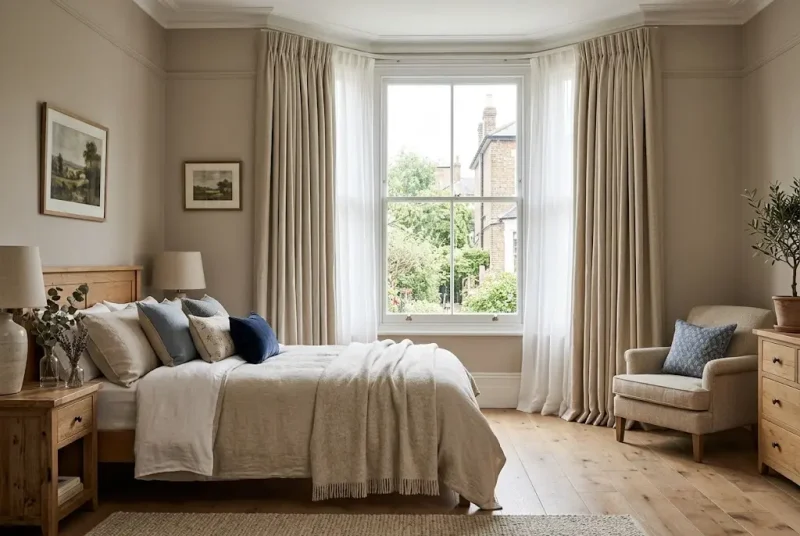
Colour has a major influence on the atmosphere of a bedroom. Soft neutrals such as cream, beige, taupe and light grey can create a calm and adaptable foundation.
Blue can introduce a cooler, restful appearance, while deeper shades can provide stronger contrast. Warmer tones can create a more intimate feel, particularly when paired with wood furniture and warm lighting.
There is no need to make curtains identical to your bedding. Instead, look for complementary colours. For example, neutral curtains can allow textured bedding to become the main focal point, while a patterned curtain can be balanced with simpler bedding.
Coordinating Bedroom Curtains With Bedding
The bed is normally the largest piece of furniture in a bedroom, which means bedding and curtains should work together visually. If you have already chosen your bedding, use it as a reference when selecting window treatments.
For instance, a neutral duvet can be combined with curtains in a slightly darker shade to create depth. Alternatively, patterned bedding can be paired with plain curtains to prevent the room from becoming too busy.
If you are building a cosy bedroom around textured bedding, our guide to teddy bedding offers ideas for combining soft textures with cushions, bedcovers and other bedroom accessories.
Likewise, if you are choosing a new duvet arrangement for a larger bed, our guide to double bed bedding set can help you consider how bedding colours and layers contribute to the overall room design.
Bedroom Drapes Curtains and Window Proportions
Bedroom drapes curtains should be appropriately proportioned for the window and the surrounding wall. Curtain length and width can affect how elegant or casual the finished treatment appears.
Before ordering, measure the window carefully and consider where the curtain pole or track will be positioned. The dimensions of the window alone may not provide all the information needed for a suitable curtain size.
Floor-length curtains can create a more traditional and polished appearance, while other arrangements may be better suited to smaller or more compact spaces. Always follow the manufacturer’s measuring instructions when ordering ready-made or made-to-measure curtains.
Blackout Curtains for Bedrooms
Blackout curtains can be worth considering if you want greater control over incoming light. They are particularly useful in bedrooms where street lighting, early sunlight or other external brightness affects the room.
They can also be incorporated into different decorative styles. You do not necessarily need to sacrifice appearance for functionality, as blackout options are available in a variety of colours and finishes.
However, the exact performance of a curtain depends on its construction, fit and installation. Pay attention to product specifications rather than assuming every thick-looking curtain provides the same level of light reduction.
Creating a Cosy Bedroom With Layered Curtains
Layering can give a bedroom window a richer appearance while providing additional flexibility. A lighter curtain can provide daytime softness, while a heavier layer can offer greater privacy and light control.
Layering does not have to mean using several bold fabrics. Two complementary textures in related shades can be enough to create depth.
The same principle can be applied throughout the bedroom. Combine curtains with bedding, cushions and a bedcover in a controlled palette rather than introducing a different colour for every item.
How Curtains Affect a Small Bedroom
Small bedrooms require careful consideration because large or visually heavy curtains can make the room feel more enclosed. Lighter colours and simpler designs can help maintain a sense of space.
Where appropriate, positioning the curtain pole higher or wider than the window can alter the visual proportions of the window. However, this should be done with consideration for the available wall space and surrounding furniture.
In compact bedrooms, it is often better to create interest through subtle texture rather than excessive pattern. This keeps the window attractive without making it dominate the room.
Bedroom Curtains in a Wider Home Interior
Although every room can have its own character, a home often feels more cohesive when related colours or materials appear in different spaces. Bedroom curtains do not need to match the living room, but a complementary palette can create a subtle sense of continuity.
If you are also updating your main living space, our guide to living room curtains covers white, beige, blue and patterned options and explains how to coordinate window treatments with existing décor.
This approach allows each room to remain individual while still feeling like part of the same home.
Practical Tips Before Buying Bedroom Curtains
Before purchasing, measure the window and check the dimensions of the curtains carefully. Also consider where the curtains will sit in relation to radiators, wardrobes, bedside tables and other furniture.
Check the fabric’s care instructions and think about whether the curtains will need regular cleaning. If the bedroom has a particular light-control requirement, review the product specifications before choosing a style.
Finally, consider the complete room rather than focusing only on the curtains. Look at your bedding, wall colour, flooring, lighting and accessories together. A curtain that looks attractive in isolation may not necessarily work with the rest of the interior.
Final Thoughts on Bedroom Curtains Drapes
The right bedroom curtains drapes can bring together the practical and decorative sides of bedroom design. They can frame windows, improve privacy, manage incoming light and add softness to the room.
Start by considering your window dimensions and lighting needs, then choose a fabric, colour and design that complements your existing décor. Coordinating curtains with bedding, cushions and other soft furnishings can create a more intentional appearance without requiring everything to match.
Whether you prefer understated neutral curtains, richer drapes or layered window treatments, the most successful bedroom design is one that feels comfortable, balanced and suited to the way you use the space.