
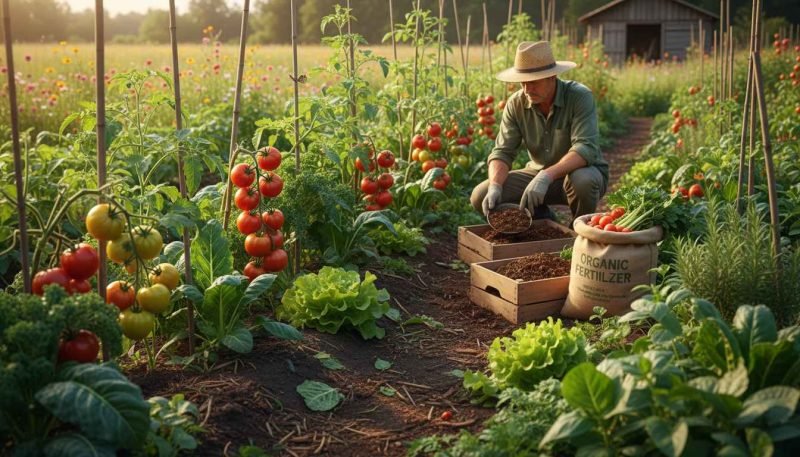
Imagine a misty morning in an untouched valley, the camera pans over dew-kissed leaves, the sun piercing through in golden shafts. Somewhere, a gardener kneels, whispering to the soil as if it holds secrets only they can hear. This is where the magic of organic agriculture begins.
1. Companion Planting
Like old friends at a masquerade ball, some plants thrive together. Tomatoes flourish near basil, carrots dance with onions. Companion planting reduces pests naturally and encourages a symbiotic garden ecosystem.
2. Cover Cropping
Cover crops, often forgotten in conventional gardens, act as nature’s blanket. They enrich the soil with nitrogen, prevent erosion, and suppress weeds. Dr. Eliza Green, a leading agronomist, notes, “Cover crops are the silent heroes of sustainable farming, quietly building fertile foundations year after year.”
3. Mulching Magic
A thick layer of organic mulch – straw, leaves, or compost – locks in moisture, moderates soil temperature, and feeds the earth as it decomposes. It’s like tucking your garden into bed each night, nurturing growth while keeping pests at bay.
As the world grapples with the pressing challenges of climate change, food security, and environmental degradation, the importance of innovative farming practices has never been more critical. The shift towards more eco-friendly methods is essential for ensuring a sustainable future for generations to come. In this context, exploring various sustainable agriculture techniques is vital. These methods not only enhance soil health and biodiversity but also promote resilience against the impacts of climate change. By adopting these practices, farmers can contribute to a healthier planet while maintaining productive agricultural systems that meet our global food demands.
4. Crop Rotation
Rotating crops prevents soil depletion and interrupts pest cycles. Imagine the plot as a chessboard: each move strategic, each season reshaping the landscape for maximum yield and minimal chemical intervention.
5. Natural Pest Management
Instead of spraying toxins, encourage beneficial insects like ladybugs and lacewings. Plant fragrant herbs and flowers to confuse pests. It’s an organic dance of predator and prey, a hidden choreography only seasoned gardeners truly appreciate.
6. Compost Alchemy
Transform kitchen scraps and garden waste into rich, dark compost. This living soil amendment teems with microorganisms, fueling plants naturally. For those looking to begin, Native Foods Nursery offers rare edible natives perfect for organic gardens.
7. Seed Saving and Heirloom Cultivation
Saving seeds from season to season preserves genetic diversity and resilience. Heirloom plants carry history within their veins, a lineage nurtured over centuries without chemical interference.
Potential Drawbacks
Organic agriculture requires patience and meticulous observation. Yields may be lower in the short term, and pest outbreaks can occur without chemical buffers. It’s not ideal for those seeking instant results or large-scale monoculture efficiency.