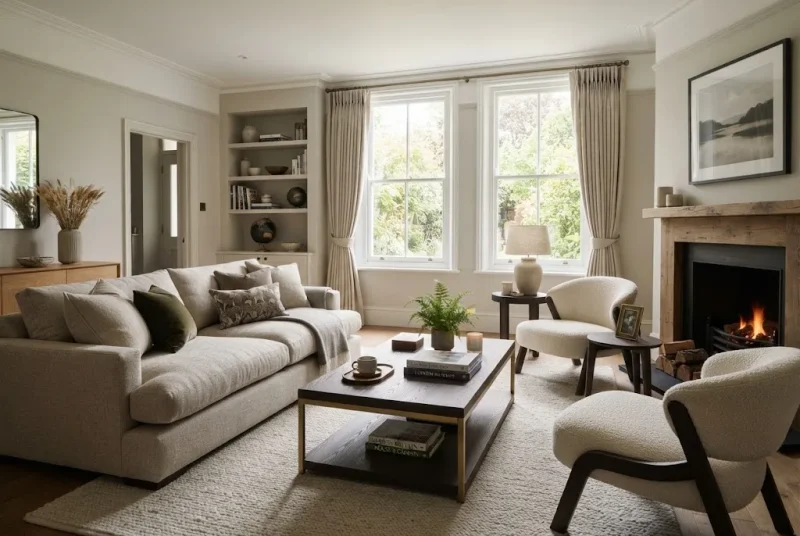
A coffee table living room arrangement can bring together seating, storage and decoration while creating a practical centre point for the space. Whether you are furnishing a compact UK flat, updating a family lounge or creating a more polished entertaining area, the right coffee table can make the room feel more balanced and functional.
A coffee table is more than somewhere to place drinks. Its size, shape, material and position can influence how easily people move around the room and how the different pieces of living room furniture work together. With careful planning, you can create a comfortable arrangement without making the space feel crowded.
What Makes a Good Coffee Table Living Room Layout?
The most effective coffee table living room layout starts with the available space and the position of the seating. A coffee table should be accessible from the main seating areas without creating an obstacle between sofas, chairs and walkways.
Before choosing a table, measure the room and consider the dimensions of your sofa or seating arrangement. A very small table can look lost in a large lounge, while an oversized design can make a compact room feel restricted.
Proportion is therefore one of the most important considerations. The table should feel visually connected to the sofa and surrounding furniture while leaving enough space for people to move comfortably.
Choosing the Right Shape for Your Living Room
Coffee tables are available in many shapes, and each option can work differently depending on the room.
Rectangular Coffee Tables
Rectangular tables are a popular choice for larger sofas and traditional seating arrangements. Their longer surface provides plenty of room for drinks, books, decorative objects and everyday items.
This shape can work particularly well when positioned in front of a long sofa. It creates a clear visual connection between the seating and the centre of the room.
Round Coffee Tables
Round designs can soften a room dominated by straight lines. They can also be useful where several seats surround the table because there are no sharp corners interrupting the visual flow.
In smaller living rooms, a round table may also make movement around the furniture feel more natural. However, the available floor area should still be measured carefully before making a choice.
Square Coffee Tables
Square coffee tables can suit larger seating arrangements, particularly where sofas or chairs are positioned around several sides of the table. They can provide a strong central focal point while offering a generous tabletop.
How Coffee Tables Work with Living Room Furniture
The coffee table should complement the rest of your living room furniture rather than compete with it. Consider the materials, colours and shapes already present in the room before selecting a new piece.
For example, a natural wood coffee table can introduce warmth into a room with neutral upholstery. A glass or minimalist design may suit a contemporary interior where maintaining a sense of visual openness is important.
You do not necessarily need every piece of furniture to match. In fact, combining complementary finishes can create a more individual and considered interior. The key is to establish some connection between the different pieces through colour, material, proportions or style.
Using Side Tables Alongside a Coffee Table
Side tables can provide useful additional surfaces without requiring a second large central table. They are particularly helpful when the main sofa is positioned away from the coffee table or when individual seating areas need their own convenient surface.
A side table beside an armchair can provide space for a reading lamp, book or drink. Meanwhile, a smaller table beside a sofa can keep frequently used items within easy reach.
Using both a coffee table and side tables also allows the room to have several practical surfaces without making the centre of the room unnecessarily large. Choose pieces that complement one another while avoiding an overly coordinated appearance.
Adding Accent Furniture to the Living Room
Accent furniture can help introduce personality into a living room. A coffee table can be an accent piece in its own right, particularly when you choose an interesting material, distinctive shape or contrasting finish.
Other accent furniture can include occasional chairs, decorative side tables, stools and compact storage pieces. These items can add character while serving a practical purpose.
When introducing accent furniture, think about visual balance. If the coffee table already has a strong design, simpler surrounding pieces may help keep the room from feeling visually busy. Conversely, a minimalist coffee table can provide a neutral foundation for more expressive chairs, cushions or accessories.
How to Choose the Right Coffee Table Material
The material of a coffee table affects both its appearance and how it works in everyday life. Wood is a versatile option that can bring warmth and texture to a room. It can suit traditional, rustic, contemporary and transitional interiors depending on the finish.
Glass can create a lighter visual effect and may be useful in rooms where maintaining an open appearance is important. Metal can introduce an industrial or modern character, while combinations of wood and metal can bridge different interior styles.
Think about your lifestyle as well as aesthetics. A busy family living room may benefit from a sturdy, easy-to-maintain surface, while a formal sitting room might allow more delicate materials and decorative finishes.
Getting the Coffee Table Size Right
Size should always be considered in relation to the surrounding furniture. A coffee table that is too large can interfere with movement, while one that is too small may not provide enough useful surface area.
Measure the distance between the sofa and the proposed table position before buying. Also consider the routes people use to enter, leave and move through the room. Maintaining practical circulation space helps the room remain comfortable during everyday use.
The height matters too. A table that sits at a suitable level relative to the sofa makes it easier to reach drinks, books and other items. The final choice should complement the height and proportions of your existing seating.
Styling a Coffee Table Without Overcrowding It
Once the table is in position, a few carefully selected accessories can make it feel more connected to the rest of the room. A tray can group smaller items together, while a book, vase or decorative object can add visual interest.
Avoid covering the entire tabletop. Leaving some open space makes the furniture easier to use and gives the room a cleaner appearance.
For homes where the coffee table is used frequently, practical styling is especially important. Decorative objects should not make it difficult to put down a mug, serve refreshments or clear the table quickly when guests arrive.
Creating a Cohesive UK Living Room
A well-planned living room does not need to follow one rigid design style. Instead, focus on how the furniture works together. A central coffee table can connect the sofa with chairs, side tables and other decorative elements, creating a more unified arrangement.
Colour is another useful way to establish continuity. You might repeat a subtle wood tone across several pieces, use a shared accent colour in soft furnishings, or combine neutral furniture with one or two stronger statement pieces.
For a wider home design approach, the same principle can be applied when choosing bedroom furniture such as bedside tables. Consistent attention to proportion, material and colour can help different rooms feel connected without requiring identical furniture throughout the property.
Practical Tips for Small Living Rooms
Smaller UK living rooms often require more careful furniture planning. Instead of choosing the largest coffee table that fits, consider what the room genuinely needs.
A compact round table can sometimes improve movement, while a visually lighter design can make the floor area feel less crowded. Storage can also be useful if the coffee table includes a lower shelf or discreet compartment.
Keeping walkways clear should remain a priority. Furniture should support the room rather than make it difficult to move between the entrance, sofa and other parts of the home.
Final Thoughts on Coffee Table Living Room Design
A successful coffee table living room arrangement combines proportion, practicality and personal style. The right table can anchor your seating area, provide useful everyday space and complement the wider design of the room.
Before buying, measure the available area, consider the size and shape of your seating, think about your preferred materials and decide how much storage or surface space you actually need. Then look at how the coffee table will interact with side tables, accent furniture and the rest of your living room furniture.
With these details considered, a coffee table can become a practical and attractive centrepiece that makes the entire living room feel more organised, comfortable and complete.