
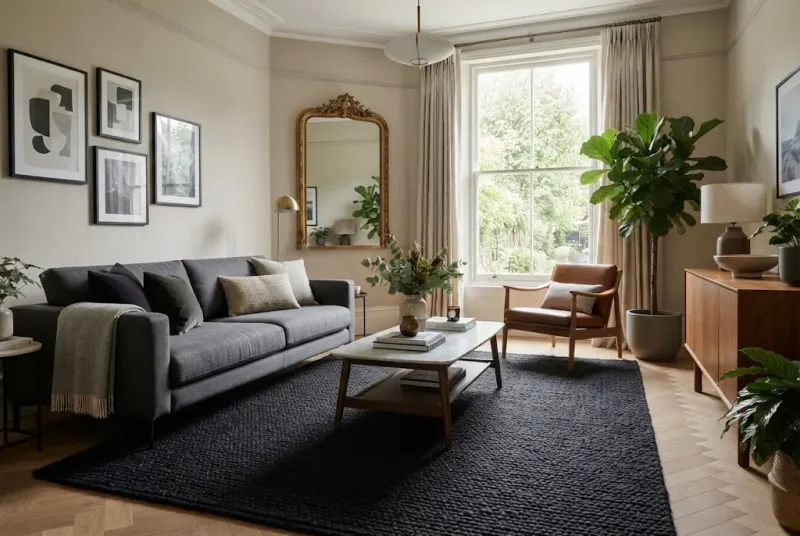
Choosing black rugs for living room spaces can transform the appearance and feel of a home. A black rug can anchor furniture, define an open seating area and introduce depth into an otherwise neutral interior. However, because black is a strong colour, the right size, texture and placement are important if you want the room to feel balanced rather than overly dark.
From soft modern interiors to traditional UK homes, a carefully selected black rug can work with many decorating styles. The key is to consider how the rug relates to your sofa, flooring, walls, lighting and other accessories. Texture also matters, particularly when you want a living room to feel warm and inviting.
Why Black Rugs for Living Room Spaces Work So Well
Black is a versatile interior colour because it creates strong visual contrast. A black rug can make lighter furniture stand out and provide a defined base for a seating arrangement. It can also connect different elements of a room when black already appears in furniture, lighting, artwork or decorative accessories.
Another advantage is that black can create a more grounded appearance. In a large living room, a dark rug can visually bring a seating area together instead of allowing individual furniture pieces to appear disconnected.
That does not mean every black rug will have the same effect. A flat woven design can create a cleaner contemporary look, while a high-pile or textured option can make the room feel softer and more relaxed.
How to Choose the Right Black Living Room Rug
When comparing a black living room rug, begin with the dimensions of the room and your existing furniture arrangement. A rug should work with the seating layout rather than simply filling an empty section of floor.
Consider the Rug Size
One of the most common mistakes is choosing a rug that is too small. A small rug floating between the sofa and coffee table can make a spacious room feel visually fragmented.
Where space allows, a larger rug can sit beneath the front legs of sofas and chairs. This helps establish a clear seating zone and creates a more cohesive arrangement.
In smaller living rooms, a compact rug can still work well, particularly when it is positioned carefully beneath the coffee table and relates directly to the main seating.
Think About Your Flooring
Black rugs create different effects depending on the floor underneath them. On pale wood or light flooring, the contrast can be dramatic and contemporary. On darker flooring, the rug can create a layered appearance, but sufficient contrast through furniture, walls or accessories may be needed to prevent the room from becoming visually heavy.
Match the Rug to Your Furniture
Consider the colour and shape of your sofa before choosing a rug. A plain black rug can complement patterned upholstery, while a textured or patterned black design can add interest beneath simple neutral furniture.
You do not necessarily need to match the rug to every item in the room. Instead, look for connections between colours and textures. Black details in table legs, shelving, lamps or picture frames can help the rug feel intentional.
Black Rugs and Different Interior Styles
One reason black rugs are popular is their ability to adapt to different decorating styles. The same basic colour can produce a completely different result depending on its material, pattern and surrounding furniture.
Modern Living Rooms
Minimalist and contemporary rooms can benefit from a simple black rug with a clean design. Pairing it with a neutral sofa, streamlined furniture and uncluttered accessories can create a sophisticated appearance.
For a modern room, avoid adding too many competing patterns. Let the rug provide contrast while other pieces maintain a relatively simple visual language.
Cosy Living Rooms
If your priority is warmth and comfort, consider a textured or high-pile rug. A soft surface can make a seating area feel more inviting, particularly during colder months.
Materials and construction vary considerably, so check the manufacturer’s care information before choosing a rug for a high-traffic household.
Traditional Interiors
Traditional rooms can also accommodate black rugs. Designs featuring subtle borders, distressed patterns or classic motifs can complement wooden furniture and richer interior colours.
In this setting, a completely plain black rug may feel stark, whereas a patterned design can connect more naturally with existing decorative details.
Are Soft Rugs a Good Choice for the Living Room?
Soft rugs can make a major difference to the atmosphere of a living room. A rug adds another tactile surface underfoot and can help make a seating area feel more comfortable.
However, softness is only one consideration. Think about how the room is used every day. A family living room with children, pets or frequent visitors may need a practical rug that is easy to maintain rather than the most delicate or luxurious option available.
Always check the manufacturer’s cleaning and maintenance instructions. Different fibres and constructions require different approaches, and some rugs are better suited to heavy everyday use than others.
What About a Fluffy Rug Carpet?
A fluffy rug carpet can create a particularly cosy appearance, especially when positioned beside a sofa or in a relaxed lounge area. Deep or shaggy textures add visual softness and can make a room feel more comfortable.
However, deeper piles can require more attention to maintenance. Dirt and debris can become harder to remove from longer fibres, so consider the amount of foot traffic the rug will receive.
If you want a plush appearance but prefer easier maintenance, a medium-pile textured rug may provide a useful compromise between comfort and practicality.
How to Place a Black Rug in the Living Room
Placement can be just as important as the rug itself. Before buying, measure your furniture and mark the intended rug area on the floor if possible. This gives you a better idea of how the finished arrangement will look.
Under the Main Seating Area
Placing the rug underneath the central seating arrangement is one of the most effective options. The rug can connect the sofa, chairs and coffee table into one defined zone.
Under the Coffee Table
For smaller spaces, placing the rug beneath the coffee table can provide a central decorative feature. Ideally, the proportions should relate to the surrounding furniture rather than leaving the rug looking isolated.
Open-Plan Living Areas
In an open-plan home, rugs can help distinguish the living area from the dining or kitchen space. A black rug can provide a strong visual boundary without requiring walls or room dividers.
When coordinating an open-plan space, consider the relationship between your living room textiles and dining furniture. Comfortable seating accessories such as kitchen and dining seat cushions can help create a consistent approach to colour and texture across connected areas.
Black Rugs in Small Living Rooms
A common concern is that a black rug will make a small room look smaller. The result depends heavily on the rest of the interior.
Rather than automatically avoiding dark colours, consider using a black rug with lighter walls, curtains and furniture. Natural daylight can also help balance the darker floor covering.
A rug with a subtle pattern can introduce variation without losing the grounding effect of black. Similarly, a textured surface can prevent the rug from appearing like a single flat block of colour.
Using Texture to Add Depth
Texture becomes especially useful when working with a monochromatic colour. A completely flat black surface can look severe in some interiors, while woven, ribbed, tufted or patterned textures can add visual interest.
Layering different materials elsewhere in the room can strengthen the effect. For example, combine a textured rug with upholstered furniture, wood, glass and soft decorative accessories.
Artificial greenery can also soften a strong black-and-neutral colour scheme. Indoor fake plants can add a natural-looking green element without requiring the regular watering associated with living plants.
Black Rug Care and Maintenance
Like any floor covering, a black rug needs suitable care if you want it to retain its appearance. Dust, crumbs and everyday debris can become visible against dark surfaces, particularly when they are lighter in colour.
Follow the manufacturer’s recommended cleaning method and vacuum according to the needs of the rug. High-traffic areas may require more frequent attention than parts of the room that are rarely walked across.
Spills should also be addressed according to the manufacturer’s instructions. Avoid applying cleaning products without checking whether they are suitable for the particular material and construction.
How to Style Black Rugs With Home Accessories
A black rug can provide a strong foundation for smaller decorative details. Cushions, throws, artwork and lighting can introduce lighter or warmer tones around the room.
If you prefer a more elegant atmosphere, metallic or glass accents can provide contrast. For a warmer appearance, combine the rug with natural wood, cream textiles and soft lighting.
Small decorative pieces can then carry selected colours through the room. For example, artificial flowers for decoration can introduce colour on a side table or shelf, while carefully selected accessories can reinforce the room’s overall palette.
Can the Same Rug Work Near the Bedroom?
The versatility of rugs means that similar textures and colours can sometimes be carried into other parts of the home. A soft black or dark-toned rug may also work in a bedroom, depending on the room’s existing colours and lighting.
When choosing a rug bedside option, consider whether you want a small accent beside the bed or a larger floor covering that extends around the sleeping area. Comfort underfoot can be particularly useful when stepping out of bed in the morning.
Similarly, the phrase bed carpet can refer to different approaches to bedroom floor covering. Rather than selecting purely on colour, consider the available floor space, furniture arrangement, maintenance requirements and desired level of softness.
Common Mistakes to Avoid When Buying a Black Rug
Choosing a Rug That Is Too Small
A rug that is noticeably undersized can make the seating arrangement feel disconnected. Measure first and consider how the rug will sit in relation to the sofa and chairs.
Ignoring the Room’s Lighting
Black absorbs visual light, so the same rug can appear very different in a bright room compared with a darker interior. Consider natural and artificial lighting before committing to a very dark design.
Forgetting About Texture
A plain black surface may look very different from a patterned or textured black rug. Texture can add depth and prevent the room from feeling visually flat.
Choosing Style Without Considering Maintenance
A rug is a practical household item as well as a decorative feature. Consider foot traffic, children, pets and cleaning requirements before prioritising appearance.
Creating a Balanced UK Home Interior
A successful interior does not require every room to use the same colours. Instead, repeating selected tones and materials can create a subtle connection between spaces.
A black rug can provide a grounding colour in the living room, while softer textiles can add comfort in the dining area. Decorative greenery and flowers can then introduce natural-looking colour and variation.
For example, candle accessories can complement a living room or dining area when styled carefully. A collection of candle holders and trays can provide another opportunity to repeat metallic, black or neutral tones across connected rooms.
Final Thoughts on Black Rugs for Living Room Spaces
Black rugs for living room spaces can combine practical floor coverage with a strong decorative effect. The most important considerations are size, placement, texture, furniture compatibility, lighting and maintenance.
A well-positioned black rug can define a seating area, create contrast against lighter furniture and make a room feel more visually complete. Soft or fluffy designs can emphasise comfort, while flat or patterned options may suit cleaner and more contemporary interiors.
Rather than treating the rug as an isolated purchase, consider how it works with the rest of your home. Coordinating textures, colours and accessories across living, dining and bedroom areas can create an interior that feels connected without becoming overly uniform.